Second annual BIG Little River Paddle Event

Update 15 Feb 2014: You can also apply to Sponsor (Gold, Silver, or Bronze) on the event page.

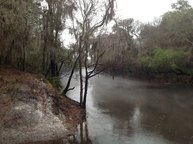
A fundraiser for nonprofits Friends of Reed Bingham State Park and WWALS Watershed Coalition, this is a scenic three mile flatwater paddle on the Little River from Red Roberts landing (at Rountree Bridge, 31 11 32.05 N 83 31 13.25 W) in the north end of the park, to the boat ramp on the Colquitt Co. side of the park lake (park map).

You can do it as a race, or as a scenic leisure paddle. Cost is $25 per boat if you register before March 15, and $30 per boat after that (registration includes park day pass/admission). You must either provide your own boat or rent one at the park (separate fee). Participants get a free shuttle and lunch. Fastest boats in various categories win a prize. Registration is at Red Roberts landing between 9:30 and 10:30 a.m. (to allow time for a shuttle). Mass start at 11 a.m.

You can sign up and pay online. Continue reading

Two bad water bills and six good ones in the Georgia legislature today

Flint Riverkeeper has a handy legislative update about water bills in the Georgia legislature, one bad one before committee today: SB 299.

SB 299 Natural Resources; provide flexibility for establishing watershed protection standards

This bill would actually do away with the riparian buffers that currently keep mud and sewage out of rivers and streams. It’s up for a vote today in the Senate Committee on Natural Resources and the Environment. At least one Senator on that committee is in WWALS watersheds: Tyler Harper, (404) 463-5263, (404) 463-4161 fax, Ocilla, District 7, (229) 425-4840. You can contact him or your state Senator. Here are many reasons SB 299 is a bad bill.

More reasons, by Camo Coalition, of the Georgia Wildlife Federation, starting with:

Siltation kills streams. Siltation can fill lakes making boat access difficult or impossible. Silt destroys the habitat of aquatic invertebrates—caddis flies, mayflies, stone flies, and such. Pollutants can kill fish and these aquatic animals directly. Destroy the food chain; destroy the fishery.

SB 213 Flint River Drought Protection Act

This bill is not anything like its name. It’s actually a water grab that would stuff Flint River water into our fragile Floridan Aquifer and during droughts take it back out, but not for downstream use, rather for shipping to Atlanta. Even though it’s a Senate bill, it’s currently in the House Agriculture and Consumer Affairs Committee, which has not yet convened this session, so now is a good time to contact your state rep. Those in WWALS watersheds include at least:
  1. Ellis Black, Valdosta, R-174, 404.656.0287, ellis.black@house.ga.gov
  2. Amy Carter, Valdosta, R-175, 229.245.2733, 404.656.6801, amy.carter@house.ga.gov
  3. Buddy Harden, Cordele, R-148, 404.656.0188, buddy.harden@house.ga.gov

The Flint River, #2 on American Rivers’ most endangered rivers list, is the next watershed to the west of us. If this bill passes, when will they come for the waters of the Little River, too?

Good Bills

Here are some good bills that need support, with descriptions from Georgia Water Coalition’s current legislative update, which covers the same bills as Flint Riverkeeper’s update.

Extending the Ban on Aquifer Storage and Recovery

Continue reading

Georgia Rivers Environment Issues.

20140202-215732.jpg

Georgia’s environment regulators urged keep hog waste out rivers.This article is by Jennette Gayer who work with Environment Georgia Advocate. Georgia’s Environmental Regulators have proposed serious rollbacks to existing rules that protect Georgia’s waterways from pollution created at large industrial hog operations. At a public hearing held by the Enviornmental Protection Division on October 25th, 2013 Environment Georgia’s State Advocate Jennette Gayer offered the following as public testimony. “Water quality in Georgia will continue to suffer if the swine and hog threshold is increased from 3000 to 5000 animal units as proposed, and those facilities are not required to obtain individual National Pollution Discharge Elimination System permits (NPDES). If we know – and we do know based on historic examples – that these operations can discharge to and impair waters, why is the state making it easier for these operations to function with less oversight? In addition to being charged with regulating CAFOs, EPD is also charged with assessing the water quality of our state’s waterways, identifying the impairments, and where impairments exist – addressing those problems to clean up the streams and creeks Georgians fish in, swim in and drink from. I want to provide a few quick examples of water segments and reaches where permitted swine operations have been determined by EPD studies to be negatively affected by animal production facilities. I’ve pulled this information from Georgia EPD’s 2012 305(b)/303(d) List Documents, Total Maximum Daily Load (TMDL) Implementation Plans, and permitting data.[1] Seven swine operations that had individual NPDES permits were immediately upstream or adjacent to state waters in the Savannah, Withlacoochee, Alapaha, Ogeechee, Canoochee, Oconee and Ocmulgee basins that do not support their designated use. The designated uses of these streams is fishing, and the primary reason for impaired waters is fecal coliform contamination, low dissolved oxygen levels, or non-point sources. In these watersheds, that fecal coliform and non-point sources are typically associated with agricultural operations. Rather than rolling back safeguards for Georgia’s waterways we should be investigating these examples of pollution near existing Hog CAFO’s and working to solve them. I urge you to act in the best interest of Georgia’s waterways and not move forward with this rule change.” [1] Georgia Water Quality Standards are connected by three components. Every water body in Georgia has one of six designated uses: fishing, drinking water supply, recreation, coastal fishing, wild river, and scenic river. And each of those designated uses must meet specific water quality criteria (such as dissolved oxygen or bacterial levels). Finally, the Clean Water Act has an anti-degradation component which is designed to protect existing designated uses and water quality. In other words, water quality is not allowed to degrade and threaten the designated use. And a downgrade in designated use “is prohibited if it would remove protection from any existing use.” (River Network) EPD is required by the Clean Water Act to assemble a list of creeks, streams, rivers and lakes that do not meet water quality standards. EPD uses the list – which is created every two years – to target areas for restoration and to remove water bodies from the list (de-list) where water quality has improved. If a water body is impaired and the designated use is threatened, EPD can place the water body on the 305b/303d list of waters. EPD can develop plans – such as a Total Maximum Daily Load (TMDL) – to improve water quality. Furthermore, the data can help EPD assess the state of a specific water body that is or might be affected by a new or renewed National Pollutant Discharge Elimination System (NPDES) permit, water withdrawal permit, or other permit that might affect designated uses and water quality standards. -CLG

Freedom Industries Company In West Virginia Had A Massive Chemical Spill & Then Files For Bankruptcy.

Which it remind us how valuable our precious rivers are to us. Because we use that clean water to drink, shower, cooking.etc, So we can live, no water mean their no human life, no wildlife or plants habitat.

01/17/14 By Nick Visser the editor of Huffington Post,Freedom Industries, Company Behind West Virginia Chemical Spill, Files For Bankruptcy.
The company behind the massive chemical spill that made tap water unsafe for more than 300,000 West Virginians has has filed for bankruptcy, according to documents obtained by The Huffington Post. According to bankruptcy filings, Freedom Industries, wholly owned by Chemstream Holdings Inc., filed for Chapter 11 bankruptcy on Friday. Freedom Industries owns the storage facility responsible for leaking up to 7,500 gallons of 4-methylcyclohexane methanol (a coal-cleaning chemical also known as crude MCHM) into West Virginia’s Elk River. Hundreds of thousands of people in nine counties were given orders not to use water for bathing or drinking for days as the company scrambled to clean up, exposing disturbing vulnerabilities in the water supply and a lack of data about hazardous chemicals and where they’re stored. A second site owned by the company was also cited for safety violations shortly after the spill. A representative for Freedom Industries told HuffPost that the company would not be commenting on the bankruptcy. Despite the filings, the U.S. attorney’s office in West Virginia told HuffPost that the new development would not have any effect on its ongoing investigation into the leak. Freedom Industries currently owes $3.66 million to its top 20 creditors, including more than $2.4 million in unpaid taxes to the IRS.

20140118-112250.jpg
-CLG

This Is A Statement From American Rivers President Bob Irvin On The Freedom Industries Chemical Spill Into The Elk River.

January 13th 2014 Statement of American Rivers’ President Bob Irvin:   “We support the communities that depend on the Elk River for their drinking water and call upon all citizens, industry, and state officials to protect this vital resource. The recent spill of coal-processing chemicals into the Elk River, contaminating the drinking water supply for hundreds of thousands of West Virginians, brings our reliance on clean, healthy rivers into sharp focus. The Elk River, like all waterways in West Virginia, is designated for use as a source of public drinking water. The Freedom Industries spill clearly shows the importance and need for upholding and enforcing laws that protect clean drinking water and public health. Preventing future spills of this kind is one reason American Rivers advocates for strong legal protections for our rivers provided by laws such as the federal Clean Water Act and related state laws.”imageThis map shows the status of water safety in the Kanawha Valley on January 13, 2014 at 5:34 pm after the chemical spill into the Elk River About American Rivers American Rivers protects wild rivers, restores damaged rivers, and conserves clean water for people and nature. Since 1973, American Rivers has protected and restored more than 150,000 miles of rivers through advocacy efforts, on-the-ground projects, and an annual America’s Most Endangered Rivers® campaign. Headquartered in Washington, DC, American Rivers has offices across the country and more than 200,000 members, supporters, and volunteers. -CLG

SB 213 Flint River water grab bill is back

As we could have guessed from the aquifer storage meeting last November, the water grab to ship to Atlanta HB 213 that failed in the Georgia House last year is back on the table this year, and it’s still a bad idea, especially with the Flint River #2 on American Rivers’ Most Endangered Rivers list.

Gordon Rogers, Flint Riverkeeper, wrote for the Atlanta Business Chronicle 10 January 2014, Bill would fundamentally change Georgia water law,

In the Dec. 13, 2013, Atlanta Business Chronicle article “Bill could aid Georgia in water case,” Georgia Environmental Protection Division Director Jud Turner was quoted saying those who object to his proposed Flint River legislation (SB 213) believe in a water swap “conspiracy theory.”

The controversial provision in SB 213 would authorize state investment in “projects to augment stream flows” and would then authorize the director to prohibit downstream property owners with permits from withdrawing “augmented” water (which is undefined). The duration of the prohibition on water withdrawals is undefined, and the bill is structured to allow private consulting companies …

-jsq

Alapaha River at Statenville: January WWALS Outing

Meet at the boat ramp/parking lot on the left just before you get to Statenville heading east on Hwy 94 at 1:30. Boat launch is at 2. We will paddle upstream for 30 to 45 min. and then float back down. The river will likely be up, so it should be a work out.

The river water temperature is currently 50 degrees Fahrenheit, so dress warmly. The Alapaha River at Statenville is currently at 9 feet and rising, which is well above the level recommended by Brown’s Guide for this river.

Jungle-like in its remoteness and luxurious with exotic vegetation, the dark reddish-brown waters of the Alapaha wind through a swampy wonderland teeming with wildlife. Signs of habitation are rare along the river’s course; only a few isolated cabins intrude on the remote tranquility.

Here’s a map: Continue reading

Access to rivers: legal issues

Legal access to rivers and other waterways in Georgia is unclear, and federal law may trump state law anyway.

Dan Washburn wrote some time in 2000 for The Times of Gainesville, GA, Access denied: Owners, users spar over land, which applies as much to the rest of Georgia as to north Georgia:

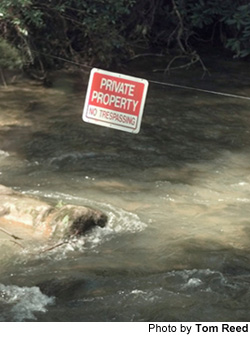
Photo by Tom Reed The conflict in North Georgia is a confusing amalgam of the old and the new, of state and federal laws, of mountains and streams. Its cast of characters includes landowners and land managers, bureaucrats and businessmen, environmentalists and adventure seekers — and lawyers, plenty of lawyers.

And much of it involves a splitting of legal and philosophical hairs that would make Mother Nature and Uncle Sam cringe.

Nowhere has this tug-of-war played out more dramatically than on Georgia’s rivers and streams, where the dispute over what is public and what is private is as murky as the Chattahoochee River after a hard rain.

There’s a lot more in the article, including this box:

Getting to the water an issue for paddlers, anglers alike

Continue reading

Alapahoochee River

Proposed for the WWALS January 2014 outing: the river most people know nothing about, from the convergence of Mud Swamp Creek where Grand Bay Creek forms the border between Lowndes County and Echols County in Georgia east of Valdosta, about 14 miles through Echols County between Lake Park and Statenville, to the Alapaha River in Hamilton County, Florida east of Jennings: the Alapahoochee River.

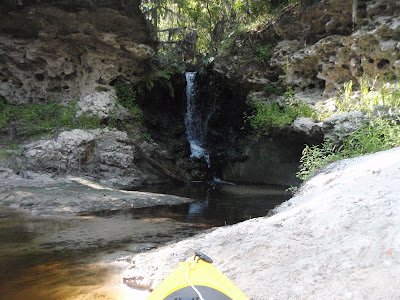
It has a waterfall, limestone caves, and boat ramps, all pictured by South Georgia Kayak Fishing 3 September 2011 in Alapahoochee convergence at Alapaha River – Jennings, FL.

Here’s a brief day paddle description, Florida whitewater, Alapahoochee River Grand Bay Canal), by riverfacts.com:

Echols / Hamilton county, GA SR 135 to FL SR 150 on Alapaha section whitewater kayaking, rafting, and paddling information.

This stretch of Alapahoochee River Grand Bay Canal) in Echols / Hamilton County is 4.5 miles long and is according to American Whitewater a class II section of whitewater.

They include a map.

Continue reading