You can join WWALS at Azalea Festival this Saturday and Sunday. Meanwhile, here are a few pictures from last year.
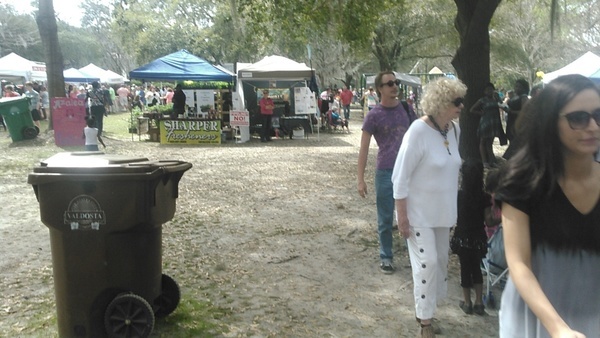

You can join WWALS at Azalea Festival this Saturday and Sunday. Meanwhile, here are a few pictures from last year.
Come help WWALS celebrate spring with 25,000 of our Valdosta-area friends, at the Azalea Festival, Saturday and Sunday 11 and 12 March 2017.
When:
10AM-6PM Saturday 12 March 2016
10AM-5PM Sunday 13 March 2016
Volunteer: WWALS members can help at the table!
Where:
Drexel Park
30.846771, -83.285066
Patterson Street at W. Brookwood Drive,
Valdosta, GA
(across Patterson from VSU)
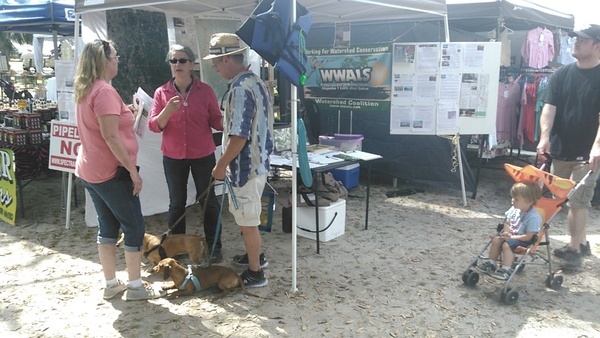
The 2017 Azalea Festival will feature arts and crafts vendors from several different states, a huge food court, six stage areas of entertainment, a Classic Car and Motorcycle Show, KidZone, entertainment, Bike Ride and 5K race, and a whole lot more. Free admission.
The 16th Annual Azalea Festival (March 14 & 15, 2016) was a huge success. Thanks to all of our attendees, entertainers, sponsors, and all of our Board members and volunteers. Saturday, March 12 was a record setting day with a single day record of over 15,000 patrons visiting the Festival. Sunday was shortened due to severe thunderstorms, but the rains didn’t dampen the successes that we had on Saturday. Average two day attendance for the Festival is approximately 25,000.
The 2016 Azalea Festival featured a record number of over 170 arts & crafts vendors from several different states, a huge food court, six (another record) stage areas of entertainment, a Classic Car & Motorcycle Show, a newly expanded KidZone, the World Famous Disc-Connected K9’s Frisbee Show, the Paul Bunyan Lumberjack Show (sponsored by The Langdale Company), the all-new Falconry Forever/Birds of Prey Exhibits and Demonstrations, entertainment by Wild Adventures Theme Park, two great bands (sponsored by Camping World of Valdosta), the VLPRA Smoothie King Century Bike Ride & 5K race, and a whole lot more. None of this would have been possible without our sponsors, volunteers, and the support of our local community.
What started off as a small, local festival 16 years ago has become a major regional festival attracting attendees from all over the Southeastern United States, as well as a major economic booster for Valdosta and Lowndes County. Our vendors, attendees, and race participants come from several different states from Florida to South Dakota.
Drexel Park is on One Mile Creek, so we can watch it for any grease-caused spills, or fish, for that matter. Maybe it won’t flood like in the rain last year that closed festival Sunday afternoon.
-jsq, John S. Quarterman, Suwannee RIVERKEEPER®
You can join this fun and work by becoming a WWALS member today!
Apparently Madison County was the first in Florida to call for state help to resolve the Valdosta sewage situation, back on February 8, 2017.
 Followed by
Hamilton
and
Suwannee Counties, both on February 21, 2017,
and the other
Followed by
Hamilton
and
Suwannee Counties, both on February 21, 2017,
and the other three four downstream Florida counties seem to have it on
their agendas.
After all, people downstream have been complaining about this since at least 2013,
and the 2009 old Withlacoochee Wastewater Treatment Plant (WWTP) overflow was one of the reasons for the founding of WWALS in 2012.
In the BOCC packet for the Wednesday March 8, 2017 Regular Meeting of the Madison County, Florida Board of County Commissioners, and see also PDF of just those two pages.
RESOLUTION 2017-02-08
A RESOLUTION BY THE BOARD OF COUNTY COMMISSIONERS OF MADISON COUNTY, FLORIDA ASKING FOR THE PROTECTION OF THE HISTORIC SUWANNEE RIVER AND THE WITHLACOOCHEE RIVER IN NORTH FLORIDA.
WHEREAS, Madison County is located in North Central Florida and is bordered by the State of Georgia to the North and the Withlacoochee River and Historic Suwannee River to the East; and
WHEREAS, the Withlacoochee River starts its journey in Valdosta, Continue reading
The Suwannee County BOCC resolution is even more explicit than the Hamilton County one.
Thanks to Eric Musgrove, Clerk, Suwannee BOCC, for the PDF.
RESOLUTION 2017-26
A RESOLUTION BY THE BOARD OF COUNTY COMMISSIONERS OF SUWANNEE COUNTY, FLORIDA REQUESTING THE PROTECTION OF THE HISTORIC SUWANNEE RIVER IN NORTH FLORIDA.
WHEREAS, Suwannee County is located in North Central Florida and is bordered for 100 miles by the Historic Suwannee River on its north, west and south sides; and
WHEREAS. the Historic Suwannee River is one of the most widely known and recognized river system in the world; and
WHEREAS, the Withlacoochee River (North) begins at its headwaters in South Georgia, and flows into the Historic Suwannee River at Suwannee County’s northwestern border area; and
WHEREAS, Suwannee County and each Continue reading
Hamilton County, Florida is not pleased with Valdosta’s sewage, and has asked the states of Georgia and Florida to step in.
Thanks to Kristy Morgan, Chief Deputy Clerk/Administrative Assistant, Hamilton County Clerk’s Office, for the PDF.
RESOLUTION 2017-01
A RESOLUTION BY THE BOARD OF COUNTY COMMISSIONERS OF HAMILTON COUNTY, FLORIDA DEMANDING PROTECTION OF THE WITHLACOOCHEE RIVER, THE ALAPAHOOCHEE RIVER, THE ALAPAHA RIVER AND THE SUWANNEE RIVER FROM THE ILLEGAL DISCHARGE OF RAW SEWAGE BY THE CITY OF VALDOSTA, GEORGIA
WHEREAS, the Withlacoochee River forms the Western boundary of Hamilton County, Florida from the Florida/Georgia state line until its juncture with the Suwannee River; and
WHEREAS, the Withlacoochee River provides recreational and economic benefits to the citizens of Hamilton County and others; and
WHEREAS, citizens of Hamilton County depend on clean water from the Withlacoochee River watershed for activities of daily life as well as for agricultural, business, and recreational purposes; and
WHEREAS, the health and welfare of many Hamilton County citizens is directly harmed by any degradation of the quality of water in the Withlacoochee River and its watershed; and
WHEREAS, the City of Valdosta, Georgia over the past several years has Continue reading
Come learn about coal ash and
bills in the Georgia legislature right now.
 Rev. Deacon Leeann Culbreath
of
Georgia Interfaith Power & Light (GIPL)
has organized two meetings,
in Tifton and Valdosta.
WWALS will be speaking at each of these meetings.
Rev. Deacon Leeann Culbreath
of
Georgia Interfaith Power & Light (GIPL)
has organized two meetings,
in Tifton and Valdosta.
WWALS will be speaking at each of these meetings.
Update 2017-02-23: Added contact information
Bills are before the Georgia legislature right now about disposing of
leaking pools of toxic coal ash,
and two members of the relevant committee are in south Georgia.
 Five landfills in south Georgia already received coal ash from TVA
several years ago, including the landfill in Lowndes County, which also
received coal ash from Florida.
Five landfills in south Georgia already received coal ash from TVA
several years ago, including the landfill in Lowndes County, which also
received coal ash from Florida.
In south Georgia,
As you can see by this interactive map, Sam Watson’s District 172 includes the Tifton-Omega/Eldorado Rd landfill in Tift County, which is also in the Georgia Senate District 13 of Greg Kirk. Sen. Kirk’s district also has Crisp Co-US 41S Site 2 (Ph 4&5) MSWL (Crisp County) and Plant Crisp (Crisp County Power Commission) – Ash Pond, Warwick, Crisp County.
In Rep. Corbett’s District 174 are two landfills: Camden Co-SR110 MSWL (Camden County), and Chesser Island Road Landfill, Inc. MSWL (Charlton County). The Chesser Island Road Landfill is one of only six in the state that had told GA-EPD two weeks ago that it does plan to accept coal ash.
The Camden County landfill is also in GA Senate District 3, William T. Ligon, Jr. (Brunswick). The Charlton County landfill is also in GA Senate District 7, Tyler Harper, who also in his district Atkinson Co – SR 50 MSWL (Atkinson County) and Fitzgerald, Kiochee Church Rd, Ph.2 (Ben Hill County).
Rep. Corbett also represents the southeast part of Lowndes County, in which just outside Corbett’s district in Amy Carter’s District 175 is Advanced Disposal Services’ Evergreen Landfill, Inc., the one that has accepted coal ash before from TVA and JEA. That Lowndes County landfill is also in GA Senate District 8, Ellis Black. Sen. Black’s district also includes the Cook County Taylor Road landfill, which is also in House District 170, Penny Houston.
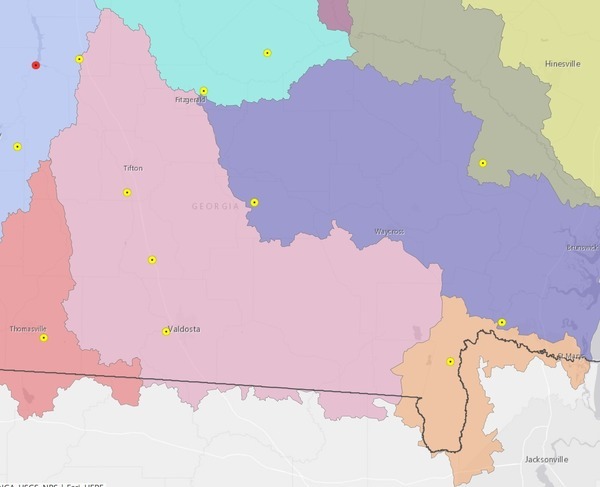
Only three landfills (and no coal ash ponds) are actually in WWALS watersheds (the Suwannee River Basin) in Georgia. They are: the Tifton-Omega/Eldorado Rd landfill in Tift County, Cook County Taylor Road landfill, and Advanced Disposal Services’ Evergreen Landfill, Inc. in Lowndes County. However, legislative districting leaves the same state legislators responsible for those landfills also responsible for others.
Here is contact information for all Georgia state legislators in the Suwannee River Basin:
In order for these bills to pass this year, they must make it out of their respective chambers (House for HB 387/HB 388 and Senate for SB 165) by Crossover Day, March 3.
For why coal ash is a problem, see this fact sheet by Georgia Water Coalition (GWC).
It is the position of GWC, of which WWALS is a member, that these bills are what is needed. WWALS is a partner of GWC and agrees that these bills are better than the current situation. WWALS has the further position that we’d prefer no more coal ash in any landfills in our watersheds, and that those companies that produced this toxic waste be responsible for disposing of it safely on their own land at their own expense.
-jsq, John S. Quarterman, Suwannee RIVERKEEPER®
You can join this fun and work by becoming a WWALS member today!
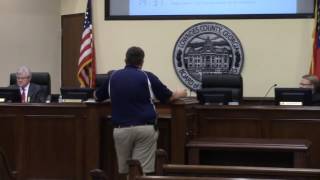 If you care about water and sewage and water quality in wells and rivers,
many county commission and city council decisions affect all of those.
Here are some examples this week from the Lowndes County Commission (LCC),
which represents the most populous county in the Suwannee River Basin,
upstream from Florida.
If you care about water and sewage and water quality in wells and rivers,
many county commission and city council decisions affect all of those.
Here are some examples this week from the Lowndes County Commission (LCC),
which represents the most populous county in the Suwannee River Basin,
upstream from Florida.
Also, WWALS board member Phil Hubbard was appointed to Continue reading
If you want the Valdosta wastewater situation to be worse,
let HB 316 SB 116 pass, taking away revenue for Valdosta or anybody upstream
or down to control stormwater.
 It turns out HB 316
was apparently from 2009.
It turns out HB 316
was apparently from 2009.
The stormwater bill before the Georgia legislature this year (2017) is SB 116.
Here are the current GAWP talking points about SB 116, which you may notice also mention HB 316, which leads me to believe SB 116 is just HB 316 back again under another name.
Please Oppose Senate Bill 116
Georgia Association of Water ProfessionalsSenate Bill 116 would exempt “water-neutral sites”, defined as those properties designed to control runoff form a 25 year, 24-hour storm event in a manner consistent with the Georgia Stormwater Management Manual (GSMM), from paying stormwater user fees charged by local governments or authorities that have established stormwater utilities. Water-neutral sites, as defined in this bill, still discharge stormwater to the local drainage system, which the local government or authority is legally responsible for operating and maintaining.
Implications of HB 316: We ask you to consider the following far-reaching implications of the bill.
- Local Control. The State of Georgia should not interfere in how a local government operates a utility or charges its customers. This would be equivalent to the State saying how a local utility could charge (or not charge) for water or sewer services. If the General Assembly exempts “water-neutral properties” from paying fees for stormwater services, could they next exempt a defined class of customers from paying local water and sewer fees in the future?
- Economic Impact on Local Governments. This bill could have a devastating impact on local governments who are required to operate and maintain stormwater drainage systems for the public good and to protect the health, safety and welfare of their communities. “Water Neutral” properties are not actually water neutral because they still discharge stormwater runoff to the local drainage system thereby causing an impact. A local government still must bear the cost of maintaining the stormwater drainage system even if every property builds a detention pond to the 25 year, 24 hour storm event standard. The City of Griffin reports that the potential loss of revenue to their stormwater utility, should this bill pass, would be approximately 40% of their annual user fee revenue, thus crippling their stormwater utility and its ability to provide essential services.
- Public Safety. Stormwater utility revenues allow local governments to reduce flooding and replace failing infrastructure, including collapsing culverts under public roads. There is an unacceptable risk to public safety if local governments no longer have the ability to collect revenues to perform important and essential storm water management services.
- Existing Credits. Eligible properties with detention ponds are already offered user fee credits ranging from 30 — 50% from most stormwater utilities. This credit is offered in recognition of the reduced impact these properties have on the drainage system. However, the credit is not 100% because controlling the 25 year, 24-hour storm does not eliminate a property’s impact on the local drainage system; the customer still receives stormwater services.
- Customer Equity. Local governments are alone in their responsibility to manage stormwater drainage systems and operate stormwater management programs to protect life and property from flooding, and to protect local waterways from stormwater impacts so that the State’s waters remain fishable and swimmable for Georgians to enjoy. There is virtually no funding available from the State or Federal governments to assist local governments in carrying out this important charge. Thus, local governments have been forced to develop local financing mechanisms to provide sufficient revenue sources to carry out this responsibility. Allowing a contributor to the problem to be exempted from participating in paying a fair user fee for this service would be grossly unfair to the remainder of the paying customers and to the local government as well.
Here are all the Georgia state senators in WWALS watersheds.
-jsq, John S. Quarterman, Suwannee RIVERKEEPER®
You can join this fun and work by becoming a WWALS member today!
In addition to ACCG and GAWP, this bill is also opposed by the Georgia Water Coalition (GWC), including WWALS. Below are talking points from the ACCG website. Please contact your Georgia state legislators.
Please Oppose House Bill 316
Association County Commissioners of Georgia
Georgia Association of Water ProfessionalsHouse Bill 316 would exempt state government entities from paying local government stormwater utility charges. While specifically using the word “charges”, the proposed exemption appears to presume that the stormwater utility fee is a tax and not a fee for services. In presenting and promoting the bill, proponents may refer to these fees as a “rain tax”. However, in 2004, the Georgia Supreme Court specifically ruled in McLeod v. Columbia County that stormwater utility charges are, in fact, a fee for services, and not a tax. The State is exempt from taxes, but there is no legal or logical basis for the State to exempt itself from paying valid fees for actual services rendered.
Implications of HB 316: Continue reading
There’s been an outcry for the EPA to intervene, from people
downstream of Valdosta on the Withlacoochee and
Suwannee Rivers.
Representing Hamilton, Suwannee, Columbia, and Baker Counties
in the Florida statehouse,
FL Rep. Elizabeth Porter [R-10]
has taken up that cry.

In the current political climate of the EPA being downsized after it already was underfunded, Continue reading