Tag Archives: VWW

Hamilton County Florida Valdosta wastewater resolution asks Georgia and Florida governors to step in 2017-02-21

Hamilton County, Florida is not pleased with Valdosta’s sewage, and has asked the states of Georgia and Florida to step in.

Thanks to Kristy Morgan, Chief Deputy Clerk/Administrative Assistant, Hamilton County Clerk’s Office, for the PDF.

RESOLUTION 2017-01

A RESOLUTION BY THE BOARD OF COUNTY COMMISSIONERS OF HAMILTON COUNTY, FLORIDA DEMANDING PROTECTION OF THE WITHLACOOCHEE RIVER, THE ALAPAHOOCHEE RIVER, THE ALAPAHA RIVER AND THE SUWANNEE RIVER FROM THE ILLEGAL DISCHARGE OF RAW SEWAGE BY THE CITY OF VALDOSTA, GEORGIA

WHEREAS, WHEREAS, the Withlacoochee River forms the Western boundary of Hamilton County, Florida from the Florida/Georgia state line until its juncture with the Suwannee River; and

WHEREAS, the Withlacoochee River provides recreational and economic benefits to the citizens of Hamilton County and others; and

WHEREAS, citizens of Hamilton County depend on clean water from the Withlacoochee River watershed for activities of daily life as well as for agricultural, business, and recreational purposes; and

WHEREAS, the health and welfare of many Hamilton County citizens is directly harmed by any degradation of the quality of water in the Withlacoochee River and its watershed; and

WHEREAS, the City of Valdosta, Georgia over the past several years has Continue reading

Only Valdosta and Tifton spilled sewage in Georgia in Suwannee River Basin in January 2017

GA-EPD’s Atlanta office sent their entire sewage spill database for January 2017 in response to an open records request from WWALS. For the Suwannee River Basin, I see only the known ones by Valdosta, plus a spill from Moultrie’s Carlton Woods Lift Station into the Ocholockonee River, with 36000 gallons, which matches the amount we got directly from Moultrie. That Ochlockonee spill is still not in the Suwannee River Basin.

The Georgia Environmental Protection Division (GA-EPD) Southwest office in Albany handles the other sewage treatment operations in the Suwannee River Basin in Georgia, and that Albany office already told us by telephone that they had no reported spills other than the Tifton spill into the New River which I had gotten directly from Tifton. So I think we can conclude there were no other sewage spills into the Suwannee River Basin in Georgia in January 2017 other than the ones from Valdosta and Tifton.

Interestingly, Valdosta with its 2.2 million gallon Withlacoochee Wastewater Treatment Plant (WWTP) leak (and three manhole spills) was not the winner. Continue reading

Bad bill HB 316 SB 116 would take away stormwater permit revenue

If you want the Valdosta wastewater situation to be worse, let HB 316 SB 116 pass, taking away revenue for Valdosta or anybody upstream or down to control stormwater.

It turns out HB 316 was apparently from 2009.

The stormwater bill before the Georgia legislature this year (2017) is SB 116.

Here are the current GAWP talking points about SB 116, which you may notice also mention HB 316, which leads me to believe SB 116 is just HB 316 back again under another name.

Please Oppose Senate Bill 116
Georgia Association of Water Professionals

Senate Bill 116 would exempt “water-neutral sites”, defined as those properties designed to control runoff form a 25 year, 24-hour storm event in a manner consistent with the Georgia Stormwater Management Manual (GSMM), from paying stormwater user fees charged by local governments or authorities that have established stormwater utilities. Water-neutral sites, as defined in this bill, still discharge stormwater to the local drainage system, which the local government or authority is legally responsible for operating and maintaining.

Implications of HB 316: We ask you to consider the following far-reaching implications of the bill.

  1. Local Control. The State of Georgia should not interfere in how a local government operates a utility or charges its customers. This would be equivalent to the State saying how a local utility could charge (or not charge) for water or sewer services. If the General Assembly exempts “water-neutral properties” from paying fees for stormwater services, could they next exempt a defined class of customers from paying local water and sewer fees in the future?
  2. Economic Impact on Local Governments. This bill could have a devastating impact on local governments who are required to operate and maintain stormwater drainage systems for the public good and to protect the health, safety and welfare of their communities. “Water Neutral” properties are not actually water neutral because they still discharge stormwater runoff to the local drainage system thereby causing an impact. A local government still must bear the cost of maintaining the stormwater drainage system even if every property builds a detention pond to the 25 year, 24 hour storm event standard. The City of Griffin reports that the potential loss of revenue to their stormwater utility, should this bill pass, would be approximately 40% of their annual user fee revenue, thus crippling their stormwater utility and its ability to provide essential services.
  3. Public Safety. Stormwater utility revenues allow local governments to reduce flooding and replace failing infrastructure, including collapsing culverts under public roads. There is an unacceptable risk to public safety if local governments no longer have the ability to collect revenues to perform important and essential storm water management services.
  4. Existing Credits. Eligible properties with detention ponds are already offered user fee credits ranging from 30 — 50% from most stormwater utilities. This credit is offered in recognition of the reduced impact these properties have on the drainage system. However, the credit is not 100% because controlling the 25 year, 24-hour storm does not eliminate a property’s impact on the local drainage system; the customer still receives stormwater services.
  5. Customer Equity. Local governments are alone in their responsibility to manage stormwater drainage systems and operate stormwater management programs to protect life and property from flooding, and to protect local waterways from stormwater impacts so that the State’s waters remain fishable and swimmable for Georgians to enjoy. There is virtually no funding available from the State or Federal governments to assist local governments in carrying out this important charge. Thus, local governments have been forced to develop local financing mechanisms to provide sufficient revenue sources to carry out this responsibility. Allowing a contributor to the problem to be exempted from participating in paying a fair user fee for this service would be grossly unfair to the remainder of the paying customers and to the local government as well.

Here are all the Georgia state senators in WWALS watersheds.

 -jsq, John S. Quarterman, Suwannee RIVERKEEPER®

You can join this fun and work by becoming a WWALS member today!

In addition to ACCG and GAWP, this bill is also opposed by the Georgia Water Coalition (GWC), including WWALS. Below are talking points from the ACCG website. Please contact your Georgia state legislators.

Please Oppose House Bill 316
Association County Commissioners of Georgia
Georgia Association of Water Professionals

House Bill 316 would exempt state government entities from paying local government stormwater utility charges. While specifically using the word “charges”, the proposed exemption appears to presume that the stormwater utility fee is a tax and not a fee for services. In presenting and promoting the bill, proponents may refer to these fees as a “rain tax”. However, in 2004, the Georgia Supreme Court specifically ruled in McLeod v. Columbia County that stormwater utility charges are, in fact, a fee for services, and not a tax. The State is exempt from taxes, but there is no legal or logical basis for the State to exempt itself from paying valid fees for actual services rendered.

Implications of HB 316: Continue reading

FL House Rep. Elizabeth Porter asks EPA to Valdosta wastewater

There’s been an outcry for the EPA to intervene, from people downstream of Valdosta on the Withlacoochee and Suwannee Rivers. Representing Hamilton, Suwannee, Columbia, and Baker Counties in the Florida statehouse, FL Rep. Elizabeth Porter [R-10] has taken up that cry.

In the current political climate of the EPA being downsized after it already was underfunded, Continue reading

Valdosta attempts to come clean about sewage, and how you can help

People keep asking me what can be done to prevent this from happening again? Valdosta has already built an entirely new Withlacoochee Wastewater Treatment Plant (WWTP) uphill out of the flood plain, and a force main to reroute sewage around most of the manholes that previously were leaking: see their extensive writeups on those and other improvements. This recent event was due to equipment failure at the new WWTP, and they have the contractors out there redoing that under warranty.

What can you do? Continue reading

SRWMD says FDEP has confirmed river contamination possibly from Valdosta sewage 2017-01-26

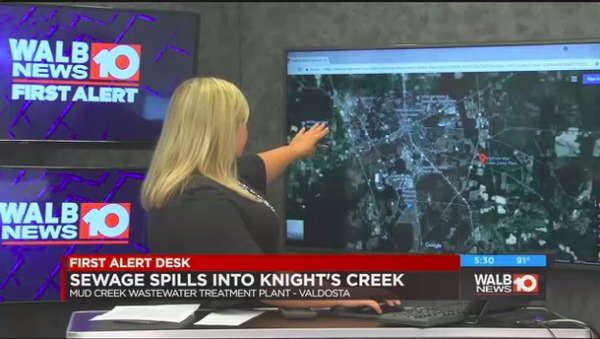
Enteric bacteria have been confirmed in the Withlacoochee River, and in the Suwannee River downstream of the confluence, USGS Streamer say SRWMD and FDEP, while there’s still no update on the City of Valdosta website about the 2.2 million gallons of sewage Valdosta leaked into the Withlacoochee River and didn’t tell the public about for two days.

Valdosta wasn’t the only city to spill into the Withlacoochee during the recent storms. Tifton did, too, but Valdosta’s spill was more than 230 times bigger than Tifton’s. And city sewage is not the only source of contamination in the rivers: wildlife, agricultural animals, and septic tanks add to it. Baseline monitoring would help disentangle which is which. But nobody is going to believe this contamination this time came from any place but Valdosta.

SRWMD, News Flash, 2017-01-26 (no time given), Health Officials Confirm Wastewater Contamination In The Withlacoochee And Suwannee Rivers,

Madison, Fla. — The Florida Department of Health in Hamilton, Madison and Suwannee today issued a joint health advisory extending the previous advisory for the Withlacoochee River to include a portion of the Suwannee River. The health advisory is now in effect for residents and visitors on the Withlachoochee River and on a portion of the Suwannee River from the point where the two rivers meet, downstream along the border of Madison and Suwannee County to the Lafayette County line just above Dowling Park. The river waters are not safe for contact during recreational use at this time.

Test results from the Florida Department of Environmental Protection water sampling in the area have confirmed high levels of enteric bacteria possibly due to a large spill of untreated sewage reported by the City of Valdosta, Georgia.

People are urged to avoid contact with water in the Withlacoochee River and the impacted areas of the Suwannee River. Water contaminated with wastewater overflow presents several health risks to humans. Untreated human sewage with microbes can cause gastrointestinal issues, disease, infections or rashes.

Anyone who comes in contact with the river water should wash thoroughly, especially hands, and before eating and drinking. Children and older adults, as well as people with weakened immune systems, are particularly vulnerable to disease so every precaution should be taken to avoid contact with river water.

Additional sampling will take place to determine when the river water is safe for recreational use.

Individuals with questions about the spillage should contact Valdosta Environmental Manager Scott Fowler at 229-259-3592 or by email at sfowler@valdostacity.com.

Individual with questions for Florida DEP should contact wastewater coordinator Jim Mayer at the NE District office in Jacksonville at 904-256-1700.

 -jsq, John S. Quarterman, Suwannee RIVERKEEPER®

You can join this fun and work by becoming a WWALS member today!

Valdosta WWTP spilled millions of gallons and didn’t tell the public for days 2017-01-25

Update 2017-01-30:

Valdosta also didn’t tell the public all day after the spill stopped, and then posted something that’s flat not true.

I just called Valdosta WWTP Superintendent John Waite, as it says to do on the city’s PR posted Wednesday, January 25, 2017 5:09:00 PM, Withlacoochee Plant Warranty Repairs Underway, which says “The plant is under warranty and the repairs will be complete by end of day Jan. 25 at no cost to the city.” Meanwhile, the Valdosta Daily Times posted yesterday evening City sewage spill stopped.

I asked Superintendent Waite when the spill stopped.

Answer: Continue reading

And also a Valdosta WWTP spill 2017-01-24

After I posted about the three manhole spills, I discovered Valdosta also announced a spill at the Withlacoochee Wastewater Treatment Plant (WWTP).

I just called Scott Fowler at Valdosta Utilities, and he explained:

The leak is from the jet mix pipe that comes back from the influence and pushes back to the EQ [Equalization Tank]. When they put the pipe in with its industrial strength rubber seal, they pressure tested it, and it held. But the seal blew this weekend. They have cameras there to watch it.

Fowler said they also going to have a camera at Wainwright Drive, where one of the other three spills, the ones from manhole covers, happened.

I pointed out to Fowler that the Valdosta PR about the WWTP spill says they detected it Sunday January 22nd, yet it wasn’t published on the city’s website until Tuesday January 24th after 6PM. He said that’s due to Continue reading

Small Valdosta sewer spills after big rains 2017-01-23

Update 2017-01-25: And also a spill at the WWTP.

Nobody likes sewer spills, but no, these are not the same as before Valdosta’s recent wastewater system improvements: Document-0001 nothing this time came from the Withlacoochee Wastewater Treatment Plant, and the amounts were small compared to previous years (10-62%) and in far fewer locations.

That didn’t stop WTXL from using this title: Amber Lewis, WTXL, 24 January 2017, Major Sewage Spill Reported in Valdosta,

The City of Valdosta has reported that a large amount of untreated sewage has spilled in the area.

The Florida Department of Health reports that Continue reading

WWALS receives grant for water conservation outreach to farmers and community

FOR IMMEDIATE RELEASE

WWALS receives grant for water conservation outreach to farmers and community (PDF)

Hahira, Georgia; December 27, 2016 — Local water conservation group WWALS Watershed Coalition (WWALS) has received a grant of Just enough water here, 31.0016918, -83.4573364 $6,000 from the Georgia Water Coalition (GWC) to help groups in towns, counties, and countryside to draw the big picture of watershed conservation, as well as to help organize at least one grant from a different source to assist at least one farmer in erosion control.

The award contract of November 11, 2016, says Continue reading