
Tag Archives: GA EPD

What stinks worse than a titanium mine too near the Okefenokee Swamp? Biomass plants in north Georgia

Should we assume a titanium mine started by the same people would be any better than the stinking biomass plants they started? You can ask the Georgia government to stop the mine that would be far too close to the Okefenokee Swamp. And don’t forget to vote for people who support clean air and water!

The “clean” wood-burning biomass plants in north Georgia stink so bad a chicken CAFO operator says he can smell it. So bad people working at the plant get sick with masks on. So bad local people say they were betrayed and a local government is suing. So bad it’s caused a fish kill in a nearby creek. So bad investors are suing. So bad it’s behind in its taxes.
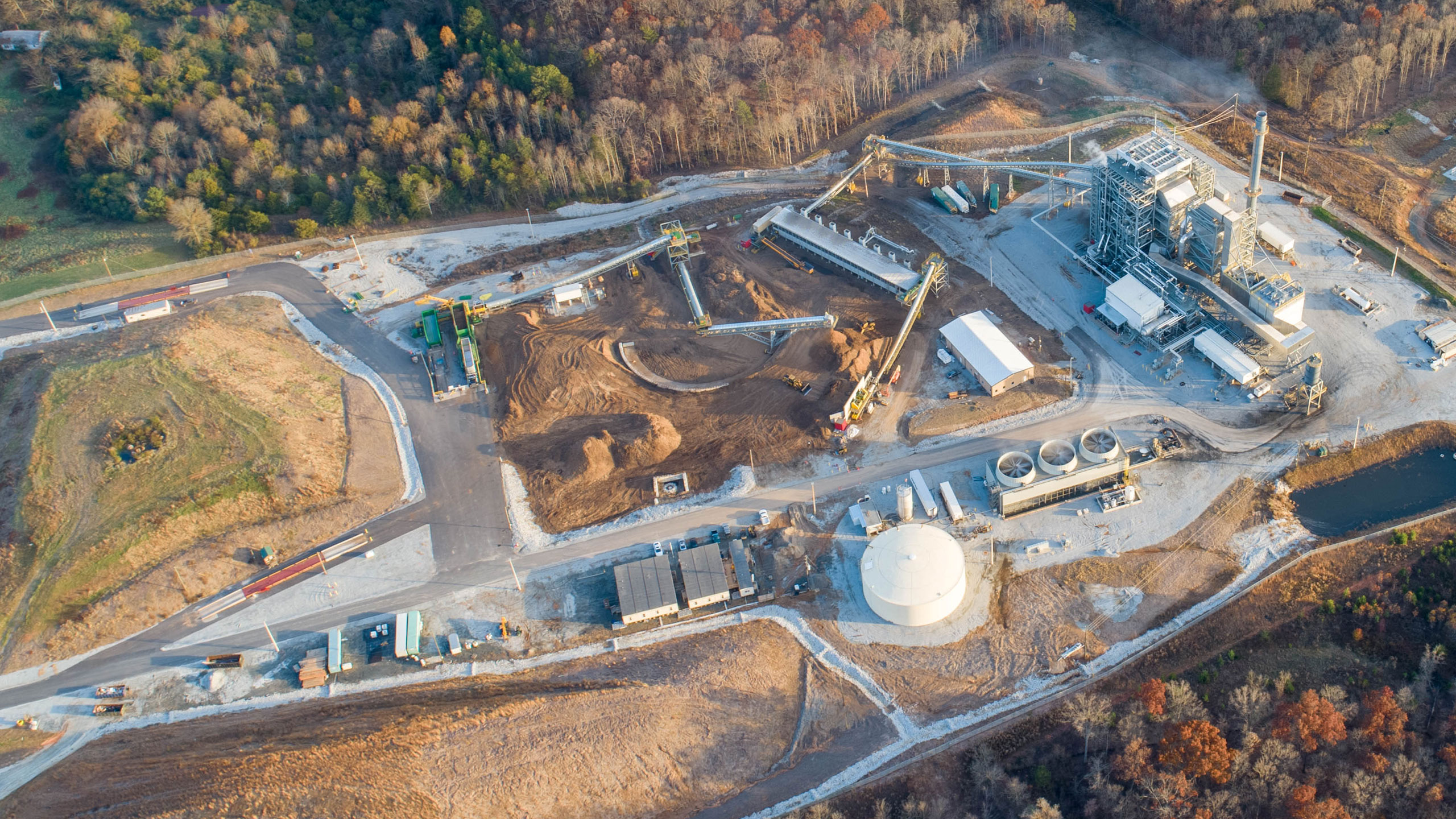
Photo: Franklin Locality, Problem: GRP Pollution

So bad local people say no amount of jobs is worth it. One asks, “did you have anybody investigate the two companies that run that plant; had they ever had EPD/EPA violations, had they ever been sued or had formal complaints brought against them”? Well, many people investigated Twin Pines Minerals, LLC, and found TPM is under a Florida Consent Order for multiple violations just across the GA-FL line.

Yet the Charlton County, Georgia, Board of Commissioners passed a resolution in favor of that titanium mine. Maybe they should review that decision in light of this track record of another project by the same people.

Maybe GA-EPD should take all this into account while considering TPM’s five permit applications. And then reject those applications.

You can help by asking them to do so.

And don’t forget to vote for people who will protect our waters and people.

Lee Shearer, Athens Banner-Herald, 12 September 2015, Alabama company plans wood-burning electricity plants near Athens,

The EPD’s Air Quality Branch earlier this summer approved one of the two pollution permit applications filed by GreenFuels Holding Company of Birmingham for a 79 megawatt plant near the Franklin County town of Carnesville.

The company filed its application for a 58 megawatt plant near Colbert about two weeks ago. State officials won’t begin to evaluate it for another couple of weeks, until a 30-day window has passed when the public can make formal comments, said Eric Cornwell, the Air Quality Branch’s program manager for stationary source permitting.

GreenFuels has a policy to not comment publicly to media, said GreenFuels vice president Steven Ingle.

Yes, the same Steven Ingle who is president of Twin Pines Minerals LLC that already has equipment on its mine site within a few miles of the Okefenokee National Wildlife Refuge. But Ingle tells us that mine will be safe. Which is also what his biomass LLC told everybody.

Biomass has become the new coal, Continue reading
U.S. Army Corps abdicates at Okefenokee Swamp, but titanium miners still need Georgia permits 2020-10-19

Update 2020-11-30: WWALS asks GA Gov. Kemp to stop strip mine near Okefenokee Swamp 2020-11-30.

Monday morning I heard from a mining source that the U.S. Army Corps of Engineers will soon announce that, due to federal rollback of the Waters of the U.S., the Corps no longer considers the streams next to the proposed mining site to be under Corps jurisdiction, even though they are far too near the Okefenokee Swamp.

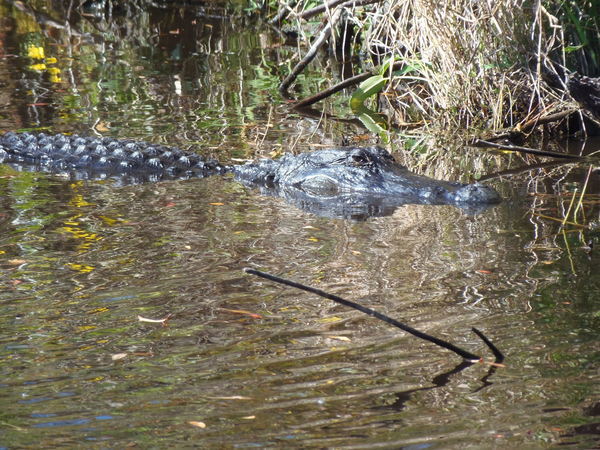
Alligator
Photo: Gretchen Quarterman, alligator in the Okefenokee Swamp

Twin Pines Minerals (TPM) lost no time announcing the next day that they intended to plow ahead. Molly Samuel, WABE, 20 October 2020, Proposed Mine Near Georgia’s Okefenokee Swamp Gets A Major Hurdle Removed.

But TPM admits they still need five Georgia permits. So let’s try to stop those.

As we’ve been saying for a long time, please write to state and federal regulators, to the Georgia governor and the Georgia DNR board, and to state and federal elected officials. See below for how.

Also, there’s an election going on. As an IRS 501(c)(3) educational nonprofit, WWALS can’t tell you what candidate or party to vote for. But we can ask you to vote for the environment.

If the Okefenokee Swamp, which is the headwaters of the Suwannee and St. Marys Rivers, is not protected, what is? If you live in south Georgia or north Florida, your drinking water probably comes from the Floridan Aquifer or groundwater above it, all of which can be adversely affected by strip mining or other pollution.

Please vote for the environment.

Georgians, don’t forget to vote for Amendment 1 while you’re voting.

Russ Bynum, Associated Press, 21 October 2020, Trump environmental rollback spurs mining near Georgia’s Okefenokee Swamp.

The Army Corps reassessed certain wetlands at Twin Pines’ request after Trump’s new clean-water rules took effect in June. The agency confirmed Tuesday that, under the rules change, the tract would no longer require a federal permit.

“This property now has Continue reading

Adel spilled ten days ago; did not show up in downstream water quality data 2020-10-10

Update 2020-10-23: Clean Withlacoochee River Thursday for WWALS Boomerang Saturday 2020-10-22.

Adel, Georgia, spilled 7,500 gallons of raw sewage from its West Ninth Street lift station ten days ago, according to GA-EPD’s Sewage Spills Report today.

The spill occured on Saturday, October 10, 2020. Apparently there were no detectable effects downstream at Valdosta and below, but we’d still prefer Adel not to spill raw sewage.

[Adel spill]
Adel spill

It’s about 34 waterway miles downstream to US 41 on the Withlacoochee River, which is the first place for which we have data. On the Monday two days after the spill, Valdosta did see elevated Fecal coliform at that North Valdosta Road location, but E. coli was within limits. Those US 41 readings were actually lower than for the Friday the day before the Adel spill. Same story farther downstream at GA 133 and US 84: lower Valdosta test results Monday than Friday.

Downstream from US 84, all results by Valdosta and Madison Health into Florida were good for Monday and the rest of that week. So apparently the Adel spill had no detectable effect downstream at Valdosta and farther. See the Continue reading

Ashburn spilled sewage three times in September 2020-09-27

Update 2020-10-17: Very clean Withlacoochee River 2020-10-15.

Ashburn, Georgia, spilled 210,000 gallons of raw sewage spread over three times in September and the public only got notified Wednesday, four weeks after the first spill. There’s not enough water quality testing data downstream from those spills to know what effects they may have had for example on Reed Bingham State Park.

[Charts and Map: Ashburn spills to GA-FL line]
Charts and Map: Ashburn spills to GA-FL line

Ashburn spilled once into Hat Creek, which runs into the Alapaha River, and twice from its MLK Lift Station into a tributary of Ashburn Branch, which runs into the Little River. We don’t have any data downstream on the Alapaha for that time period, so we don’t know anything about downstream effects. We do have quite a bit of downstream data for the other two spills, but so far downstream and with so many other things going on that it’s hard to tell if there were any effects showing up in that data.

About the only thing we know for sure is it would be great for Ashburn to get a grip on its chronic sewage spill problem, starting by at least reporting spills in a timely manner. That and it would be great if the state of Georgia or the federal government would resume testing on the Little and Alapaha Rivers as they apparently used to do up until about 1998, so we would know, for example, did this spill affect Reed Bingham State Park.

These are the spills, as reported in the Georgia Environmental Protection Division (GA-EPD) Sewage Spills Report. WWALS commends GA-EPD for those online reports. GA-EPD can’t publish spills until it receives reports from the spilling organizaiton. Maybe Ashburn could be a bit more timely in reporting. Continue reading

Quitman, GA, April 2020 spill cause of contamination in Withlacoochee River? 2020-04-24

The recent Georgia spills are now in the WWALS composite spreadsheet of Georgia and Florida water quality data.

Other than the very large December 2019 Valdosta spill, none of the spills (except one) obviously correlate with high E. coli as tested.

Which one? The April 24, 2020, Quitman spill, which may have been seen four days later at Running Springs on the Suwannee River.

[Withlacoochee, Quitman spill, Running Springs, Suwannee]
Withlacoochee, Quitman spill, Running Springs, Suwannee

Continue reading

Sewage spills, Suwannee River Basin, Dec. 2019 – Sept. 2020

Rochelle, Ashburn, Tifton, Adel, Moody AFB, Valdosta, and Quitman all spilled sewage into the Suwannee River Basin in Georgia from December 2019 through September 2020. But only one of those spills since December is likely to explain any contamination we’ve been seeing on the Withlacoochee River.

[Little, New, Withlacoochee, Summary, Alapaha River]
Little, New, Withlacoochee, Summary, Alapaha River

Yes, there were also some spills in Florida in the Suwannee River Basin, but those are actually harder to interpret, and they were mostly small, so they will have to wait.

At least Florida lets people sign up for pollution notices by county as they happen. Georgia has no such signup. So I’ve modified the scripts WWALS uses to display changes in the Georgia Sewage Spills Report to also send me an email alert.

Here are the Georgia spills, where, what streams they went into, and how far upstream that was: Continue reading

WWALS concurs, good to boat, Withlacoochee River 2020-08-06

Update 2020-08-15: Moultrie rain washed E. coli down Okapilco Creek; good now 2020-08-13

WWALS testers Jacob and Michael Bachrach also got good results from their Thursday samples: 66 cfu/100 mL E. coli at State Line Boat Ramp and zero (0) at Nankin and Knights Ferry Boat Ramps. Can’t get much better than that!

WWALS Testing Committee Chair Suzy Hall did remark that the Petrifilms for State Line showed quite a bit of other Fecal coliforms. But we can’t quantify those with the Petrifilm method, and we go by E. coli.

Of course, something else could have gotten into the river since Thursday. All of these results are always merely advisory.

But as far as we can tell, it’s a great weekend for boating on the Withlacoochee River!

[Good WWALS results, Knights Ferry, Nankin, State Line]
Good WWALS results, Knights Ferry, Nankin, State Line
For context and the complete WWALS composite spreadsheet of Georgia and Florida results, see: https://wwals.net/issues/testing/

As you can see, the WWALS 66 at State Line was quite similar to the Madison Health 10. The Florida agencies use laboratories with more precision in their results than WWALS can get with Petrifilms: 66 is the lowest WWALS can show before zero.

These Thursday WWALS results at Knights Ferry, Nankin, and State Line corroborate what Valdosta got Wednesday at Knights Ferry, Nankin, and State Line, shifted downstream somewhat due to water flow and a day later. Note Valdosta got slightly higher results at Nankin Wednesday, and WWALS got slightly higher at State Line, which is about what we would expect from water flow.

Until the next big rain (or dumping or, we sure hope not, sewage spill), water quality will probably remain good.

 -jsq, John S. Quarterman, Suwannee RIVERKEEPER®

You can join this fun and work by becoming a WWALS member today!

GA 133 Friday bad again? But good everywhere else, Withlacoochee River 2020-08-06

Update 2020-08-08: WWALS concurs, good to boat, Withlacoochee River 2020-08-06.

The good news: all green for boating, fishing, swimming, etc. from Cook County Boat Ramp on the Little River @ GA 76 and on the Withlacoochee River from US 41 through the GA-FL line past Madison Blue Spring. Thanks to Madison Health and the City of Valdosta for testing, and to WWALS testers Trudy and Conn Cole for finding zero E. coli on the Little River @ GA 76 (Cook County Boat Ramp).

The bad news: last Friday, again there was massive fecal bacterial contamination in the Withlacoochee River @ GA 133, far higher than the 410 cfu/100 mL single-test limit and twice the 1,000 alert limit. See also What do these numbers mean?.

The better news: a usually reliable source tells me that GA-EPD has found the culprit and is dealing with it. And the culprit was not governmental; it was a private company. More on that when I know more.

[Map: All green on Swim Guide]
Map: All green on Swim Guide.

It’s really strange that such a high concentration of fecal bacteria at GA 133 did not show up downstream. Where did it come from? It’s not runoff: there was no rain, except way up at Skipper Bridge, which should have showed runoff contamination at US 41 before GA 133 if that was the source.

It’s not Valdosta or Lowndes County: they had no spills.

It’s almost like somebody dumped some septic tank or RV liquids into the river. Continue reading

Current Situation of Water Quality Testing, Suwannee River Basin 2020-08-02

People mostly don’t know about all the additional testing, nor the cows, nor the new Consent Order on Valdosta.

Even if you’ve been following the Withlacoochee River water quality situation, some of what has happened and has been discovered is probably not obvious. Here is an attempt to describe the current situation, many of the people and organizations involved, and some things you can do to help. See also printable PDF.

[Page 01]

August 2, 2020

To: Potential Partners in helping clean up the Withlacoochee River

Re: Current Situation of Water Quality Testing, Suwannee River Basin

Dear Potential Partner,

Trudy Cole wrote about water quality testing for WWALS:

“We do this so not just our grandchildren,
but your grandchildren have clean water to drink, fish, and swim in.

“Clean water, it’s not just important,
it is vital.”

We’ve never found anyone who wants to swim, boat, or fish in dirty water, much less drink it. Continue reading

Tens of thousands commented against a strip mine near the Okefenokee Swamp

Hahira, Georgia, May 30, 2020 — From every U.S. state and beyond, tens of thousands comments poured in to the Army Corps against a permit application for a titanium strip mine far too near the unique blackwater gem of the Okefenokee Swamp. The comment period ended Thursday. You and your elected officials can still ask the U.S. Army Corps of Engineers to do the right thing and deny this permit, or at least require an Environmental Impact Statement.

[44,000 commenters against strip mine on a map]
44,000 commenters against strip mine on a map

“With its unique ecosystem and incomparable beauty,” says Suwannee Riverkeeper John S. Quarterman, “the Okefenokee Swamp is a national and international treasure, and the source of the St. Marys and Suwannee Rivers. With its opportunities for boating, birding, fishing, photography, adventure, and hunting nearby attracting 600,000 visitors a year and supporting more than 700 jobs, the Okefenokee National Wildlife Refuge (NWR) provides more economic benefit to each of Georgia and Florida than any other refuge.”

The groups supporting the Swamp and opposing the mine include twenty Waterkeepers from three states, and umbrella organizations Waterkeepers Florida and Waterkeeper Alliance.

Contact: John S. Quarterman, Suwannee Riverkeeper, contact@suwanneeriverkeeper.org, 229-242-0102.

See below for a longer press release from Georgia River Network about the several dozen organizations loosely associated to protect the Okefenokee Swamp from anything that might harm it, such as this strip mine for private profit for paint.


Tens of Thousands Voice Opposition Over Mine Proposed to be Located Next to the Okefenokee Swamp

Continue reading