Tag Archives: Georgia

Ask Florida governor to intervene about Valdosta wastewater –Suwannee BOCC 2017-02-21

The Suwannee County BOCC resolution is even more explicit than the Hamilton County one.

Thanks to Eric Musgrove, Clerk, Suwannee BOCC, for the PDF.

RESOLUTION 2017-26

A RESOLUTION BY THE BOARD OF COUNTY COMMISSIONERS OF SUWANNEE COUNTY, FLORIDA REQUESTING THE PROTECTION OF THE HISTORIC SUWANNEE RIVER IN NORTH FLORIDA.

REQUESTING THE PROTECTION OF THE HISTORIC SUWANNEE RIVER IN NORTH FLORIDA WHEREAS, Suwannee County is located in North Central Florida and is bordered for 100 miles by the Historic Suwannee River on its north, west and south sides; and

WHEREAS. the Historic Suwannee River is one of the most widely known and recognized river system in the world; and

WHEREAS, the Withlacoochee River (North) begins at its headwaters in South Georgia, and flows into the Historic Suwannee River at Suwannee County’s northwestern border area; and

WHEREAS, Suwannee County and each Continue reading

Hamilton County Florida Valdosta wastewater resolution asks Georgia and Florida governors to step in 2017-02-21

Hamilton County, Florida is not pleased with Valdosta’s sewage, and has asked the states of Georgia and Florida to step in.

Thanks to Kristy Morgan, Chief Deputy Clerk/Administrative Assistant, Hamilton County Clerk’s Office, for the PDF.

RESOLUTION 2017-01

A RESOLUTION BY THE BOARD OF COUNTY COMMISSIONERS OF HAMILTON COUNTY, FLORIDA DEMANDING PROTECTION OF THE WITHLACOOCHEE RIVER, THE ALAPAHOOCHEE RIVER, THE ALAPAHA RIVER AND THE SUWANNEE RIVER FROM THE ILLEGAL DISCHARGE OF RAW SEWAGE BY THE CITY OF VALDOSTA, GEORGIA

WHEREAS, WHEREAS, the Withlacoochee River forms the Western boundary of Hamilton County, Florida from the Florida/Georgia state line until its juncture with the Suwannee River; and

WHEREAS, the Withlacoochee River provides recreational and economic benefits to the citizens of Hamilton County and others; and

WHEREAS, citizens of Hamilton County depend on clean water from the Withlacoochee River watershed for activities of daily life as well as for agricultural, business, and recreational purposes; and

WHEREAS, the health and welfare of many Hamilton County citizens is directly harmed by any degradation of the quality of water in the Withlacoochee River and its watershed; and

WHEREAS, the City of Valdosta, Georgia over the past several years has Continue reading

Pictures, McIntyre and Arnold Springs, Nankin to Madison Hwy, Withlacoochee River 2016-07-09

Update 2024-02-29: Now with better picture format.

We found McIntyre Spring, and Arnold Springs, too, on the WWALS Withlacoochee River Outing from Nankin Boat Ramp to Madison Highway Boat Ramp, July 9th 2016. Swimming, snorkeling, karst, shoals, an abandoned railroad trestle, more shoals, State Line Shoals, old road bridge posts, dragonflies, and Halberdleaf rosemallow (Hibiscus laevis All.), unfortunately plus Chamber bitter.

[McIntyre Spring and State Line Shoals 2016-07-09]
McIntyre Spring and State Line Shoals 2016-07-09

Update 2017-05-13: On 2016-07-09, the US 84 Quitman gage showed about 1.75 feet (85.26 NAVD), and the Pinetta gage showed about 6.57 (53.08 NAVD). That’s a foot lower than June 22, 2013, when we thought that was already as low as you’d want to paddle.

Here are a few videos, some pictures, and a google map showing where the pictures were taken.

 -jsq, John S. Quarterman, Suwannee RIVERKEEPER®

You can help with clean, swimmable, fishable, drinkable, water in the 10,000-square-mile Suwannee River Basin in Florida and Georgia by becoming a WWALS member today!
https://wwals.net/donations/

Videos

Here is a playlist of WWALS videos:
https://www.youtube.com/playlist?list=PLKwQ5xfKf-Qyed6eWPp4xcYNjZI-NMW-j Continue reading

GA HR 289: Recommend Congress remove eminent domain from Federal National Gas Act

It’s just a resolution, but if passed by the Georgia House, the same that voted 128 to 34 to deny river-drilling easements to Sabal Trail, it will send a message to Congress. Maybe Florida’s statehouse would like to pass a similar resolution.

A RESOLUTION recommending that Congress remove the power of eminent domain from the Federal Natural Gas Act; and for other purposes.,

LC 34 5041

17

House Resolution 289

By: Representatives Dunahoo of the 30th, Quick of the 117th, McCall of the 33rd, Caldwell of the 20th, Raffensperger of the 50th, and others

A RESOLUTION

WHEREAS Recommending that Congress remove the power of eminent domain from the Federal Natural Gas Act; and for other purposes.

WHEREAS, the Georgia House of Representatives and Georgia Senate are concerned about the disastrous impact unrestrained use of eminent domain has on the private property rights of the citizens of Georgia; and

WHEREAS, America’s Founding Fathers clearly understood that private property rights were the foundation, not only of prosperity, but of freedom itself; and

WHEREAS, the common law, state law, and the United States Constitution were written to protect property rights, including the rights of people to freely acquire, use, and dispose of property; and

WHEREAS, Continue reading

GA HR 281 Water Trails resolution

This bipartisan resolution sounds like a good idea to me. And apparently it also looks good to the Georgia Forestry Association (of which I am a member).

Capitol Forestry Report, GFA, 20 February 2017:

House Resolution 281
Sponsor: Rep. Spencer Frye, D-Athens
This is a resolution with no force of law the supports the use and enjoyment of river trails in the State of Georgia. GFA has engaged with the bill’s author, Rep. Spencer Frye, who is very supportive of private property rights for forest landowners in Georgia.
Status: House Natural Resources and Environment Committee.

WWALS has two water trails, the Alapaha River Water Tral, and the Withlacoochee and Little River Water Trail, both following up on many years of harmony among boaters and landowners dating back to earlier Canoe Trails on the same rivers in the 1970s.

HR 281: A RESOLUTION recognizing and encouraging the proliferation and use of water trails in Georgia; and for other purposes. Continue reading

Five water items at Lowndes County Commmision + a board appointment @ LCC 2017-02-14

If you care about water and sewage and water quality in wells and rivers, many county commission and city council decisions affect all of those. Here are some examples this week from the Lowndes County Commission (LCC), which represents the most populous county in the Suwannee River Basin, upstream from Florida.

Also, WWALS board member Phil Hubbard was appointed to Continue reading

Only Valdosta and Tifton spilled sewage in Georgia in Suwannee River Basin in January 2017

GA-EPD’s Atlanta office sent their entire sewage spill database for January 2017 in response to an open records request from WWALS. For the Suwannee River Basin, I see only the known ones by Valdosta, plus a spill from Moultrie’s Carlton Woods Lift Station into the Ocholockonee River, with 36000 gallons, which matches the amount we got directly from Moultrie. That Ochlockonee spill is still not in the Suwannee River Basin.

The Georgia Environmental Protection Division (GA-EPD) Southwest office in Albany handles the other sewage treatment operations in the Suwannee River Basin in Georgia, and that Albany office already told us by telephone that they had no reported spills other than the Tifton spill into the New River which I had gotten directly from Tifton. So I think we can conclude there were no other sewage spills into the Suwannee River Basin in Georgia in January 2017 other than the ones from Valdosta and Tifton.

Interestingly, Valdosta with its 2.2 million gallon Withlacoochee Wastewater Treatment Plant (WWTP) leak (and three manhole spills) was not the winner. Continue reading

Bad bill HB 316 SB 116 would take away stormwater permit revenue

If you want the Valdosta wastewater situation to be worse, let HB 316 SB 116 pass, taking away revenue for Valdosta or anybody upstream or down to control stormwater.

It turns out HB 316 was apparently from 2009.

The stormwater bill before the Georgia legislature this year (2017) is SB 116.

Here are the current GAWP talking points about SB 116, which you may notice also mention HB 316, which leads me to believe SB 116 is just HB 316 back again under another name.

Please Oppose Senate Bill 116
Georgia Association of Water Professionals

Senate Bill 116 would exempt “water-neutral sites”, defined as those properties designed to control runoff form a 25 year, 24-hour storm event in a manner consistent with the Georgia Stormwater Management Manual (GSMM), from paying stormwater user fees charged by local governments or authorities that have established stormwater utilities. Water-neutral sites, as defined in this bill, still discharge stormwater to the local drainage system, which the local government or authority is legally responsible for operating and maintaining.

Implications of HB 316: We ask you to consider the following far-reaching implications of the bill.

  1. Local Control. The State of Georgia should not interfere in how a local government operates a utility or charges its customers. This would be equivalent to the State saying how a local utility could charge (or not charge) for water or sewer services. If the General Assembly exempts “water-neutral properties” from paying fees for stormwater services, could they next exempt a defined class of customers from paying local water and sewer fees in the future?
  2. Economic Impact on Local Governments. This bill could have a devastating impact on local governments who are required to operate and maintain stormwater drainage systems for the public good and to protect the health, safety and welfare of their communities. “Water Neutral” properties are not actually water neutral because they still discharge stormwater runoff to the local drainage system thereby causing an impact. A local government still must bear the cost of maintaining the stormwater drainage system even if every property builds a detention pond to the 25 year, 24 hour storm event standard. The City of Griffin reports that the potential loss of revenue to their stormwater utility, should this bill pass, would be approximately 40% of their annual user fee revenue, thus crippling their stormwater utility and its ability to provide essential services.
  3. Public Safety. Stormwater utility revenues allow local governments to reduce flooding and replace failing infrastructure, including collapsing culverts under public roads. There is an unacceptable risk to public safety if local governments no longer have the ability to collect revenues to perform important and essential storm water management services.
  4. Existing Credits. Eligible properties with detention ponds are already offered user fee credits ranging from 30 — 50% from most stormwater utilities. This credit is offered in recognition of the reduced impact these properties have on the drainage system. However, the credit is not 100% because controlling the 25 year, 24-hour storm does not eliminate a property’s impact on the local drainage system; the customer still receives stormwater services.
  5. Customer Equity. Local governments are alone in their responsibility to manage stormwater drainage systems and operate stormwater management programs to protect life and property from flooding, and to protect local waterways from stormwater impacts so that the State’s waters remain fishable and swimmable for Georgians to enjoy. There is virtually no funding available from the State or Federal governments to assist local governments in carrying out this important charge. Thus, local governments have been forced to develop local financing mechanisms to provide sufficient revenue sources to carry out this responsibility. Allowing a contributor to the problem to be exempted from participating in paying a fair user fee for this service would be grossly unfair to the remainder of the paying customers and to the local government as well.

Here are all the Georgia state senators in WWALS watersheds.

 -jsq, John S. Quarterman, Suwannee RIVERKEEPER®

You can join this fun and work by becoming a WWALS member today!

In addition to ACCG and GAWP, this bill is also opposed by the Georgia Water Coalition (GWC), including WWALS. Below are talking points from the ACCG website. Please contact your Georgia state legislators.

Please Oppose House Bill 316
Association County Commissioners of Georgia
Georgia Association of Water Professionals

House Bill 316 would exempt state government entities from paying local government stormwater utility charges. While specifically using the word “charges”, the proposed exemption appears to presume that the stormwater utility fee is a tax and not a fee for services. In presenting and promoting the bill, proponents may refer to these fees as a “rain tax”. However, in 2004, the Georgia Supreme Court specifically ruled in McLeod v. Columbia County that stormwater utility charges are, in fact, a fee for services, and not a tax. The State is exempt from taxes, but there is no legal or logical basis for the State to exempt itself from paying valid fees for actual services rendered.

Implications of HB 316: Continue reading

Wide-ranging Sabal Trail opposition article by Molly Minta in The Fine Print

Molly Minta, The Fine Print, 5 February 2017, Rise Against the Machine: In 2013, Marion County residents began to receive letters from Sabal Trail Transmission. Now, they’ve made it their mission to save their land, and stop Sabal Trail.


Photo: Molly Minta.
An oak tree is felled by Sabal Trail construction workers.

Months before the town considered bankruptcy in 2013, residents of Dunnellon began to receive letters from a company called Sabal Trail Transmission. The letters were an introduction and explained why the company was coming to the area: to build a natural gas pipeline and compressor station. The letters were part of the first step in the process of getting a pipeline approved.

Only landowners within 600 feet of the pipeline received a letter, so not many people in Dunnellon are aware of it. But the ones who are fear it could completely disrupt their way of life.

The pipeline will pass within a mile of the Rainbow River; residents fear Continue reading

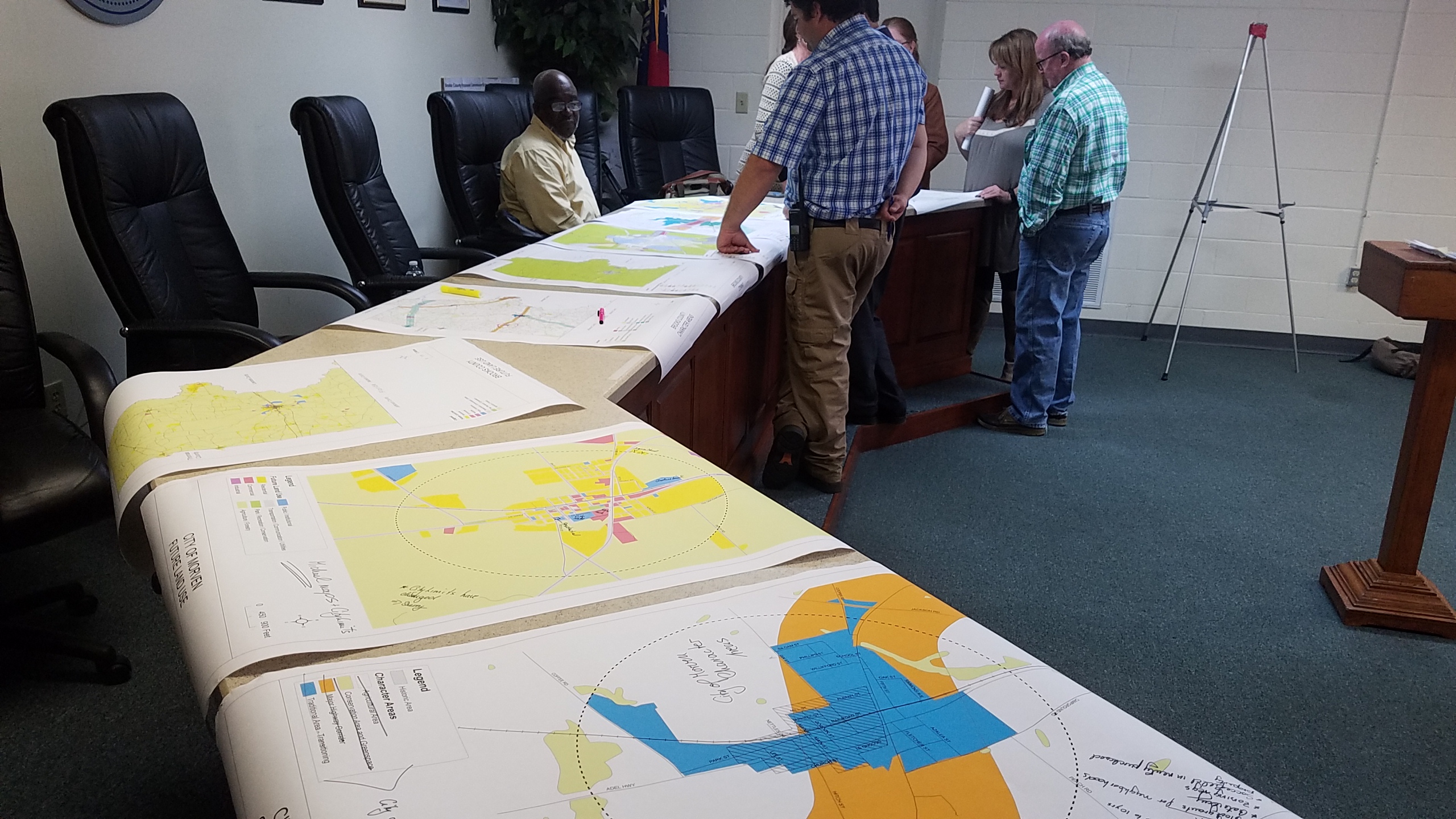
Brooks County Comprehensive Plan Workshop

More about that in a previous post.

 -jsq, John S. Quarterman, Suwannee RIVERKEEPER®

You can join this fun and work by becoming a WWALS member today!