Category Archives: Quality

FL DEP to issue permit trusting Sabal Trail to prevent leaks into the Floridan Aquifer

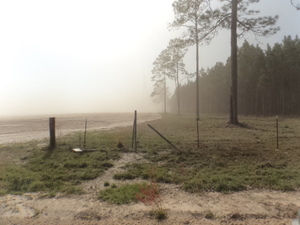
Canada’s National Energy Board just ordered Spectra Energy to fix chronic corrosion and leak problems after numerous fines, as did U.S. PHMSA before, yet 300x194 Horizontal Directional Drilling, in Suwannee River crossing, by Sabal Trail Transmission, for WWALS.net, 10 July 2015 Florida’s DEP plans to trust Spectra to build the Sabal Trail pipeline on top of our Floridan Aquifer, drilling under the Suwannee and Santa Fe Rivers.
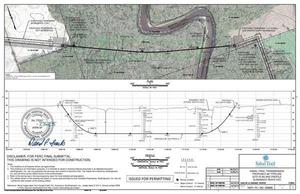
This in the Notice of Intent to Issue Sabal Trail Transmission of 10 July 2015 sounds good without that context: Continue reading

Please join the opposition to the Sabal Trail watershed invader –WWALS to SSRWPC

This letter is for today’s Monday 20 July 2015 SSRWPC meeting, at Aniston’s Restaurant, 1404 W. Baker Highway, Douglas, GA. See also the LAKE videos of last month’s SSRWPC meeting. -jsq

PDF

Dear Suwannee-Satilla Regional Water Planning Council,

WWALS Watershed Coalition is the WATERKEEPER® Affiliate representing the watersheds of the Withlacoochee and Little Rivers, which are in the proposed paths of the Sabal Trail natural gas pipeline through Lowndes, Brooks, and Colquitt Counties Georgia.

WWALS has long opposed that pipeline from Alabama to Florida, which is funded by NextEra Energy of Florida and Duke Energy of North Carolina for construction by Spectra Energy of Houston, Texas. WWALS is an intervenor against it with the Federal Energy Regulatory Commission (FERC) on docket CP15-17.

Please ask FERC to deny a permit for Sabal Trail

Continue reading

Two GA-EPD water advisories about US 84 widening project

Thirty-day comment periods closing 12 August 2015 to comment on the US 84 widening project, say 300x175 Greasy Branch, CSX Railroad, Upper Suwannee River Watershed, in Two GA-EPD water advisories about US 84 widening project, by John S. Quarterman, for WWALS.net, 13 July 2015 two Public Advisories from GA-EPD Watershed Protection Branch. One is in the Satilla River watershed, about “two existing open water ponds (outflowing into jusrisdictional[sic] wetlands associated with Lees Branch)”: those ponds are next to the groundwater-contaminating CSX railyard in Waycross. One is in the Upper Suwannee River watershed, about “three existing open water ponds (outflowing into jusrisdictional[sic] waters associated with Greasy Creek and the CSX railroad)”. Maybe the Southern Environmental Law Center letter to GDOT and the U.S. Army Corps of Engineers got some results, although these advisories are from a different state agency.

The Upper Suwannee one starts at Continue reading

GA 135 Alapaha River Cleanup 2015-09-26

It’s the annual WWALS Adopt-A-Stream cleanup, this time at GA 135 on the Atkinson County side of the Alapaha River, plus if there’s time, the Berrien County side.

When: 9AM Saturday September 26th 2015

Where: Continue reading

Douglas again for Suwannee-Satilla Regional Water Planning Council 2015-07-1520

From Leigh Askew Elkins of UGA via GRN, same city as last month, different venue:

The Suwannee — Satilla Regional Water Council will convene on Monday, July 20, 2015 at 10:00am in the meeting room in Aniston’s Restaurant, 1404 W. Baker Highway, Douglas, GA. Registration will begin at 9:30am. Among other things, the Council will affirm its plans for enhancing inter-council planning and for engaging key implementing actors. The Council will also discuss its recommendations for plan revisions.

Seems like it’s time for them to say something about the Sabal Trail fracked methane pipeline, and about the shale basin under our Floridan Aquifer. Maybe WWALS will send something to them about that.

-jsq

Agricultural land bought by west coast investors

Investment firms owned by Bill Gates have bought thousands of acress of agricultural land in counties in or near WWALS watersheds in south Georgia and north Florida, all above the Floridan Aquifer, near the Alapaha, Alapahoochee, Withlacoochee, and Suwannee Rivers, as part of a nationwide buying spree of a quarter million acres.

Here’s a summary of what we’ve found thus far. Any more recent posts should be found through this search.

These purchases of hundreds and thousands of contiguous acres are all after Bill Gates announced in 2012 he was going to “fix” agriculture in conjunction with Monsanto and Syngenta.

And it’s not just Bill Gates. Continue reading

EPA coal plant emission limits still in place during legal cost review

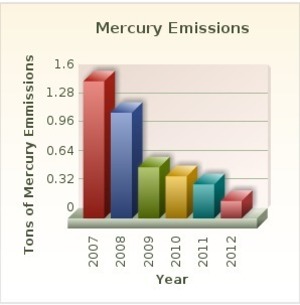
Justice Scalia never said the EPA emissions rule was struck down, rather the Supreme Court sent it back to a lower court to get a cost analysis from EPA. 300x305 Mercury, in Improving Air Quality in Georgia, by Georgia Power, 30 June 2015 Meanwhile, many of the emissions controls are already in place on coal plants (including Plant Scherer), other coal plants have closed or are closing, and investors are abandoning coal in droves. So what Scalia wants may or may not be impossible for EPA to deliver, but EPA actually already has helped sink dirty coal. Meanwhile, Georgia Power finally is helping the sun rise on Georgia. So the prognosis is good for less mercury in the Alapaha River.

Emily Atkin, ThinkProgress Climate, 29 June 2015, What Everyone Is Getting Wrong About The Supreme Court’s Mercury Pollution Ruling, Continue reading

This sister earth now cries out to us –Pope Francis

Pope Francis makes a religious, ethical, humane, scientific, and practical case for stewardship of this earth and its waters, with moral and ethical bases for “the choices which determine our behaviour”. His case does not require any reader to be Catholic or Christian, as the Pope integrates his faith with the science of an integral ecology. You don’t have to agree with everything he wrote (I don’t) to agree with the gist of it, in the words of Dr. Martin Luther King Jr.:

“all life is interrelated”

Tiber River, vatican.va

Pope Francis’ letter to the world is long but well worth reading in full, and these excerpts I hope will encourage everyone to do that.

ENCYCLICAL LETTER LAUDATO SI’ OF THE HOLY FATHER FRANCIS ON CARE FOR OUR COMMON HOME, 18 June 2015, Vatican City. Continue reading

Suwannee River Basin watershed organizations and Suwannee-Satilla Regional Water Planning Council

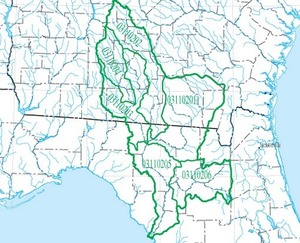
300x243 HUC 031102 Suwannee Basin, in Suwannee Region HUC, by USGS, for WWALS.net, 14 June 2015

Update 2015-06-22: SOS will remain focused on the Lower Suwannee.

Can’t tell the players without a card, and there’s a new player at Monday’s Suwannee-Satilla Regional Water Planning Council 2015-06-15, in between south of Satilla Riverkeeper and WWALS Watershed Coalition: Save Our Suwannee.

Also, WWALS is now WWALS Watershed Coalition, a WATERKEEPER® Affiliate, conserving the Alapaha and Withlacoochee River basins, including the watersheds of all their tributaries.

In Florida, Continue reading

The Alapaha River Corridor: a high priority wildlife landscape feature

Interesting find by Heather in the State Wildlife Action Plan, July 31, 2015, Georgia Department of Natural Resources, Wildlife Resources Division, featuring the newly-scientifically-recognized Suwannee River alligator snapping turtle. Maybe we’ll see one on the WWALS outing this Sunday from Sasser Landing to Jennings Bluff, and you can preview some of the vegetation mentioned in Julie Bowland’s pictures.

Alapaha River Corridor

The Alapaha River is a nonalluvial (blackwater) river in the Gulf Coastal Plain of Georgia. The Alapaha River corridor includes significant upland habitats associated with sandhill environments. This system includes longleaf pine-scrub oak woodlands, old-growth dwarf pondcypress swamps, mesic hardwood bluffs, and depression ponds. High priority species associated with these habitats include striped newt, gopher frog, gopher tortoise, spotted turtle, eastern indigo snake, eastern diamondbacked rattlesnake, tiger salamander, silky camellia, and pondspice. The Alapaha River is inhabited by the Suwannee River alligator snapping turtle, a distinct, newly described species that is rarer in Georgia than the species found in other drainages. (Note: this conservation landscape spans the Southeastern Plains and Southern Coastal Plain.

Fortunately, the Alapaha River has no Continue reading