Category Archives: Quality

Aquifers, sinkholes, and ground scans –Don Thieme @ WWALS

Moved to VSU, University Center, Dogwood Room!
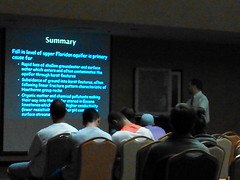
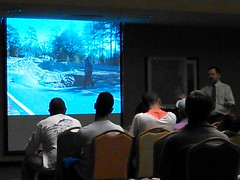
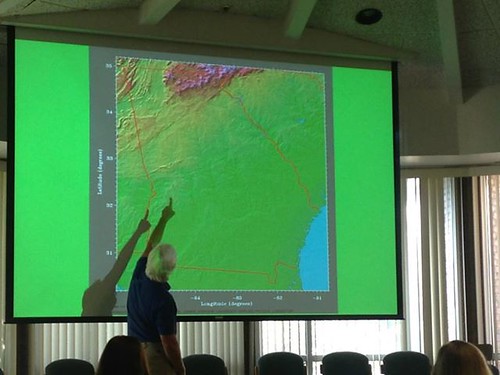
Prof. Don Thieme of VSU will speak about underground water issues at the October WWALS board meeting in Wednesday October 9th at 7:30 PM in Adel at the IHOP, 1200 W 4th Street. Valdosta.

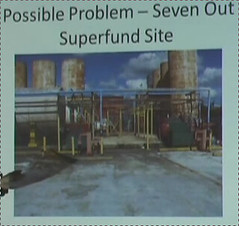
Here’s the letter Prof. Thieme and two other VSU professors wrote to the Air Force about sinkholes and subsidence on the proposed Moody Family Housing in Lowndes County, which also turns out to be in an aquifer recharge zone.

It’s an open board meeting anyone can attend for the business part, as well. Here’s the agenda:

Agenda WWALS Board Meeting
7:30 pm October 9, 2013
IHOP, Adel GA
  1. Call to Order, Welcome and Introductions
  2. Speaker: Don Thieme, VSU geologist. Topic: Aquifers, sinkholes, and ground scans.
  3. Agenda Review: Additions and Changes
  4. Review and Approval of Minutes of September Board Meeting
  5. Future Meetings and Events
    1. Monthly outing (fourth Saturday): October 26, 2013 at Banks Lake near Lakeland.
    2. Monthly board meeting (second Wednesday): November 13 Continue reading

the single largest asset that you’ll ever own –Gordon Rogers

Albany TV covered yesterday’s WWALS Watershed Conference. First picture by Fox31, the rest by John S. Quarterman and Gretchen Quarterman. WWALS video will follow.

Franklin White wrote for Fox31online yesterday, The importance of Watershed conservation,

Gordon Rogers says, “it’s important to advocate for good management by our resource agencies within that framework of laws.”

Franklin White, Fox 31, and Gordon Rogers, Flint Riverkeeper at WWALS Water Conference

Gordon says it hits home for him because the Flint River where he works ranks second on the american rivers endangered rivers list, a reason he says water management is such an important issue to the region.

Hydrology

He says, “it belongs to all of us. it’s the single largest asset that you’ll ever own is your river and your creek and you’re aquifer.”

Environmental Lobbyist Neill Herring says the goal is to restore and preserve the habitat, water quality and flow of the Flint and other rivers.

Neill Herring

Herring says, “these natural resources particularly the water systems are their private property, they have a property interest in the water.”

And outside of the Flint, officials say there are four other major rivers to keep an eye on. those being Willacooche, Withlocooche, Alapha, and Little River systems.

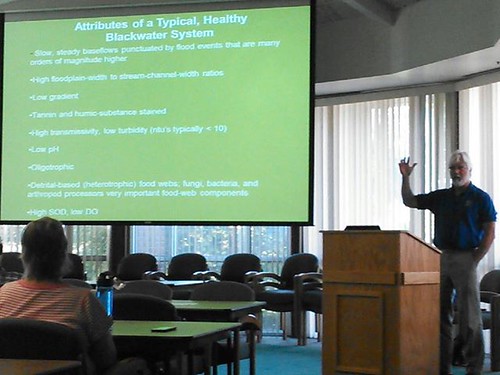
Blackwater

“Cause it’s a rapidly moving political landscape. Operating wisely with this limited amount of water that you have,” says Gordon.

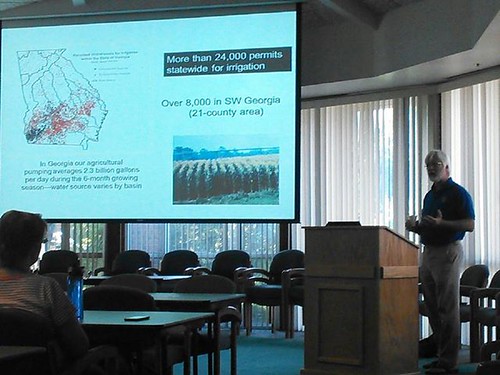
Permits

He says it’s important for local citizens to take ownership of the political process of their watershed. To learn more, visit the Watershed Coalitions website at WWALS.net.

WWALS Watershed Conference, Tifton, GA, 24 August 2013

How we manage water affects our water’s quality and quantity. WWALS logo WWALS Watershed Coalition is pleased to announce a Water Conference where Gordon Rogers, Flint Riverkeeper will share information on hydrology of the South Georgia region and Neill Herring, Environmental Lobbyist, will discuss upcoming legislation that can affect our watersheds and aquifer. The conference will take place in Tifton on Saturday, August 24, 2013 from 9:00 am until noon at the NESPAL, University of Georgia, Tifton Campus at 2360 Rainwater Road.

Continue reading

JIA replies to WWALS about marsh and land

“There currently are no plans for more development on Jekyll Island” said JIA in a response to WWALS’ assertion that marsh is not land. So why does a map under consideration by JIA show all marsh as land at mean high tide? Could “currently” mean until the law gets changed? -jsq

Continue reading

Marsh is not land, not here, not at Jekyll Island –WWALS Watershed Coalition

Unanimously approved Wednesday by the WWALS board (PDF). JIA meets next Monday 15 July 2013.

From:
WWALS Watershed Coalition
3338 Country Club Road #L336
Valdosta, GA 31605
www.wwals.net
10 July 2013

To:
Governor Nathan Deal,
Attorney General Sam Olens,
the Jekyll Island Authority,
and the Georgia Legislature

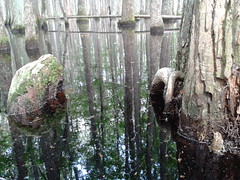
Frog viewing swamp Here in central south Georgia our pocosin swamps and blackwater river flood plains are important for fishing, hunting, wildlife and ecological preservation as well as recreation and flood control. In our watersheds we have serious problems of flooding at least partly due to Continue reading

Agricultural runoff

The Southern Georgia Regional Commission invites you to contact them about agricultural runoff. WWALS is concerned with how industrial farming and clear cutting affects both water quality and quantity in our watershed.

Runoff on Old Valdosta Road in Berrien County 2013-07-08 The pictured example of runoff from a cotton field was in Berrien County yesterday. While rain was pouring down, it ran half way across the road, and two cars wrecked. Once it gets across the road, either over it or through the culvert, it runs into the Withlacoochee River. As Pesticide Action Network reminds us, “Conventionally grown cotton uses more insecticides than any other single crop.”

Abbie Fentress Swanson wrote for GPB 6 July 2013, What Is Farm Runoff Doing To The Water? Scientists Wade In,

Agriculture is the nation’s leading cause of impaired water quality, according to the U.S. Environmental Protection Agency.

Continue reading

George Vellidis Dissolved Oxygen Slides

PDF of Dissolved Oxygen Dynamics in the Upper Suwannee River Basin by Prof. George Vellidis, Crop & Soil Sciences Dept., University of Georgia, Tifton, GA. He used these slides when he discussed the dynamics of dissolved oxygen concentrations in WWALS waterways at the 8 May 2013 WWALS board meeting.

More later.

-jsq

Arsenic, Outings, and Flooding: WWALS Watershed Coalition @ VLCIA 2013-04-16

Water issues strongly affect economic development, so I talked about the new WWALS Watershed Coalition at the 16 April 2013 Board Meeting of the Valdosta-Lowndes County Industrial Authority.

The VDT declined to speak, so I did. After apologizing for no okra today, I commended the Authority for talking about the missing agenda items and for mentioning due diligence and flood control.

Mostly I talked about the new WWALS Watershed Coalition, www.wwals.net, incorporated in June 2012, which is about watershed issues such as flooding, water quality, and invasive species related to the Withlacoochee, Willacoochee, Alapaha, and Little River System. I mentioned arsenic in some local well water, which the Department of Health has finally said should be tested, three years after Janet McMahan discovered it was a problem. I invited VLCIA board and staff to two upcoming WWALS events:

WWALS board meetings are every second Wednesday of the month, usually at the IHOP in Adel because it’s centrally located. WWALS is communicating with Valdosta and various organizations about flooding and other watershed-wide issues, which in my opinion have to do with things like too much clearcutting without consideration for where the water goes, too much development without consideration for what the impervious surface would do, (to my surprise, the Executive Director and several board members nodded along with that) so it was good to hear them mention flood containment.

Here’s the video:


Arsenic, Outings, and Flooding: WWALS Watershed Coalition
Regular Meeting, Valdosta-Lowndes County Industrial Authority (VLCIA),
Norman Bennett, Tom Call, Roy Copeland, Chairman, Mary Gooding, Jerry Jennett, Andrea Schruijer, Executive Director, J. Stephen Gupton, Attorney, Tom Davis, CPA, Allan Ricketts, Project Manager,S. Meghan Duke, Public Relations & Marketing Manager, Lu Williams, Operations Manager,
Video by John S. Quarterman for Lowndes Area Knowledge Exchange (LAKE), Valdosta, Lowndes County, Georgia, 16 April 2013.

-jsq

Flint River #2 on American Rivers’ Most Endangered Rivers list

American Rivers released Wednesday its list of America’s Most Endangered Rivers® 2013, and our neighbor to the west, the Flint River, is on it. Some of the Flint’s problems are the same as in our WWALS watersheds, including drought and floods. The writeup doesn’t mention it, but I think the arsenic wellwater problem extends over there, too. The Flint does have Atlanta at its headwaters, and Flint Riverkeeper and others just had to fight off a legislative attempt to frack Flint water for Atlanta. However, the overpumping problem was apparently already much worse in parts of our watersheds way back in 1980. And the Flint doesn’t have the Lowndes County Commission, which prefers to close its only public access to the Alapaha River rather than listen to 350 people wanting to keep it open for demonstrated public uses. -jsq

Flint River, Georgia Take Action
At Risk: Water supply for communities, farms, recreation, and wildlife
Threat: Outdated water management

The Flint River provides water for over one million people, 10,000 farms, unique wildlife, and 300 miles of exceptional fishing and paddling. Despite being in a historically wet area of the country, in recent years many Flint River tributaries are drying up completely and the river’s low flows have dropped dramatically.

American Rivers and Flint Riverkeeper are working in collaboration with diverse partners to restore the flows and health of the Flint. The State of Georgia also has a role to play and must act to protect the Flint in droughts and at all times to safeguard the river’s health for today and future generations.

The Threat

The Flint is a river running dry. The reasons are many, and include

Continue reading