Tag Archives: Floridan Aquifer

Aquifer Conference, Monticello, FL, 2014-10-2,3,4

Update 2 Oct 2014: WWALS will have a table at the conference. See you there!

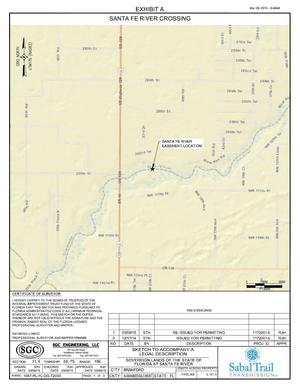
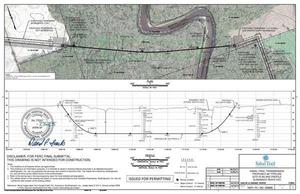
This conference coming up next Thursday, Friday, and Saturday looks quite interesting. I wonder if they know they’re directly on the Sabal Trail fracked methane pipeline Alternative 3 which would gouge through the Floridan Aquifer from Albany, GA through Monticello and then east and south across the Ochlockonee, Aucilla, Ecofina, Suwannee, and Santa Fe Rivers?

Sharing Water:
The Floridan Aquifer in Alabama, Georgia and Florida
Continue reading

USGS warns Withlacoochee River already leaks into Floridan Aquifer

There’s a reason Valdosta’s water wells are 400 feet deep. Its earlier, shallower wells were sucking up Withlacoochee River water that still leaks into groundwater. Should we risk a fracked methane pipeline digging under that same river and possibly causing more sinkholes and underground movement of contaminants, some perhaps coming from the pipeline itself or its demands for pressure testing water?

Sustainability of Ground-water Resources, by William M. Alley Thomas E. Reilly O. Lehn Franke, 1 January 1999, U.S. Department of the Interior, U.S. Geological Survey – Publisher. In Box E on Page 63:

The Connection Between Surface-Water Quality and Ground-Water Quality in a Karst Aquifer


Figure E-1. Estimated percentage of Withlacoochee River water in ground water in the Upper Floridan aquifer, June 1991. (Modified from Plummer and others, 1998.)
The Upper Floridan aquifer, which is the sole source of water supply for Valdosta, Georgia, and much of the surrounding area, receives large volumes of direct discharge from the Withlacoochee River through sinkholes in the streambed or off-channel. A highly interconnected conduit system has developed Continue reading

Video: Withlacoochee River and springs where Sabal Trail pipeline would cross

Chris Mericle’s introducation says this video:

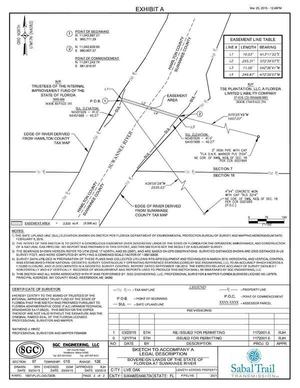
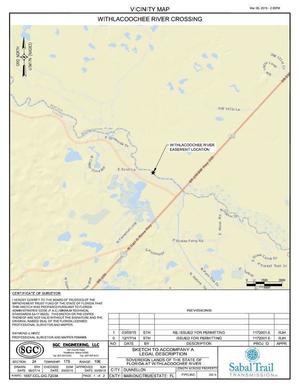
shows some of the springs, sinkholes, and other karst features that lie in close proximity to the proposed Sabal Trail gas pipeline where it crosses the Withlacoochee River in Hamilton and Madison County, Florida.

Including active sinkholes right next to the proposed pipeline route. And a karst window a couple of hundred feet from the pipeline.

Here’s the video:

The video is about the part of the Withlacoochee River where Continue reading

Water and property rights more important than methane pipeline profits

This is a long version of the op-ed sent to many newspapers in WWALS’ watersheds; there is also a short version. -jsq

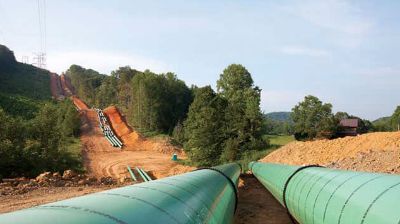
Protesters drove as far as nine hours to Leesburg, GA July 10th, where Spectra Energy lost its eminent domain demand for its Sabal Trail 36-inch, hundred-foot right-of-way natural gas pipeline, and local landowners countersued. Spectra hobbled back to Houston, Texas bound by strict conditions for surveying that one Mitchell County property, and bound to haunt south Georgia again for a trespass jury trial.

The ensuing flurry of newspaper op-eds by Spectra’s Andrea Grover plus a page-long Sabal Trail interview in the Valdosta Daily Times (VDT), didn’t mention numerous Sabal Trail downsides. Continue reading

Water and property rights over methane pipeline profits

This is an op-ed submission sent to many newspapers in WWALS’ watersheds and beyond. There is also a longer version. -jsq

Protesters drove up to nine hours to Leesburg, GA July 10th, where Spectra Energy lost an eminent domain demand for its Sabal Trail 36-inch, hundred-foot right-of-way natural gas pipeline, and local landowners countersued. Spectra hobbled back to Houston, Texas, bound by strict conditions for surveying that one property, and bound to haunt south Georgia again for a trespass jury trial.

Spectra bragged in op-eds about 50 public meetings, never mentioning overwhelming public opposition in Moultrie, Valdosta, Clyattville, Madison and elsewhere to that gash through our fields, forests, and wetlands, and under our Withlacoochee River twice.

Sabal Trail’s air quality permit application with Georgia’s Environmental Protection Division met immediate Continue reading

Proposed EPA Water rule

The U.S. Environmental Protection Agency proposes some new rules to clarify Clean Water Act protection. Some people and organizations have concerns about that, and the EPA has now responded to those concerns. Comment periods are still open for you to provide input directly to EPA about the proposed rule.

Here’s the EPA’s Waters of the United States Proposed Rule. EPA says clarification of the Clean Water Act was requested by a broad range of state, tribal, and local government agencies and elected officials and NGOs, ranging from AASHTO to the National Association of State Foresters. One of the two examples EPA cites of state enforcement problems is on the Flint River in Georgia:

Recreation in Lake Blackshear, Georgia

Continue reading

Suwannee Bioregion Coalition?

Related to population centers in the Suwannee River watershed, someone asked, “Do we need an interstate Suwannee Bioregion Coalition to guard the waters that feed into the Suwannee River?” We’ve got pieces of it already cooperating to some extent in opposing the Sabal Trail pipeline. There are many other even larger issues that everyone in the Suwannee River basin faces.

In south Georgia and north Florida we have Continue reading

Avoid our area –Florida’s Suwannee River Water Management District to FERC

What they told FERC today was more subtle than just “avoid our area”, but after the Sabal Trail methane pipeline avoid karst limestone, any unconfined areas of our Floridan aquifer, caves, springs, wetlands, drilling under rivers, blasting, or using groundwater for testing pipes or disposing of it afterwards, where can that pipeline go?

The Suwannee River Water Management District (SRWMD) covers the Florida parts of WWALS’ watersheds, and our Withlacoochee River is named in the SRWMD comments. Unlike Georgia’s Suwannee-Satilla Water management District, SRWMD has state funding and staff that produced some very interesting comments.

This is the first I’ve heard of this point about source and disposal of testing water: Continue reading

Entering the Floridan Aquifer Recharge zone –Kristofer Graham

Written as a newspaper letter to the editor and posted here with permission. -jsq

Dear Residents

Did you know Lanier County doesn’t have zoning laws. Which that mean they can development on wetlands and on our Floridan Aquifer Recharge zone and build resident houses, subdivided, commercial building etc., cut timber on wetlands, on our watersheds and a Natural Gas Company want to put a pipeline through on these precious lands they can. It will destroy the land environment like our Floridan Aquifer Recharge zone (aka our drinking water) and our wetlands and our watersheds. Because it not protected like it should.

Lanier County Groundwater Recharge Areas Well it time to protect it before it all destroy and gone. It is up to our local government to protect these precious lands and preserve it in the original state. Yes it’s time for our local government to do there job to protect it. So it can be there forever.

I notices they got those lands zone as Ag and V5 zone. Which those zone doesn’t protect it and in fact it can destroy those lands Eco system because they spray pesticide for there farm crops near the Floridan Aquifer Recharge zone and wetlands, our watersheds. It will Continue reading

Aquifer storage meeting in Newton, GA 7 November 2013

It looks like SB 213 is being resurrected after falling in the Georgia House in March. This GEFA ASR meeting is in Newton, which is not far west of Tifton. When will they be coming for the waters of the Little River, too?

Jim West in the Albany Herald 29 March 2013, Flint River bill fails in the House, quoted Gordon Rogers, Flint Riverkeeper, and then referred to Georgia Water Coalition:

One aspect of the bill river advocates found objectionable was the concept of “stream flow augmentation,” including aquifer storage and recovery, or ASR, which Coalition officials define as “the injection of ground water into the aquifer, which would be extracted later and sent downstream.” According to the Coalition, the process could cause irreversible contamination of the aquifer.

GEFA News 30 October 2013, Aquifer Storage Project Public Meeting Scheduled, Continue reading