Tag Archives: Suwannee River

Rights to Clean Water, Air, and Land

Update 2021-06-15: Right to Clean Water, and four more Florida ballot initiatives 2021-05-20.

Update 2021-02: New York State Environmental Rights Amendment for November 2021 ballot: “Each person shall have a right to clean air and water, and a healthful environment.”

See also the 1972 Montana precedent.

Update 2021-02-24: The regulatory trap at SRWMD: 30 speakers, yet unanimous Nestlé permit 2021-02-23.

Update 2021-01-31: Green Amendment Passes in the New York State Legislature.

Update 2021-01-22: Orange County, Florida (home of Orlando) passed a Bill of Rights for Nature, becoming the most populous local government area in the U.S. to do so; see below.

Does it seem most of the agencies, laws, and rules are rigged for big corporations and against local private property rights, against local fishing, swimming, boating, and hunting, and against organizations like Riverkeepers and Waterkeepers?

[Sabal Trail fracked methane pipeline, titanium mine too near Okefenokee Swamp, Suwannee River Basin]
Sabal Trail fracked methane pipeline, titanium mine too near Okefenokee Swamp, Suwannee River Basin.
See also WWALS map of all public landings in the Suwannee River Basin.

One approach to change that is a Bill of Rights for Nature (BOR), to change the legal structure so rivers, swamps, aquifers, lakes, etc. presumptively have rights that corporations have to prove they are not violating. There are at least three ways to do this: personhood for a waterbody, a Bill of Rights for Nature spelling out specific rights such as to exist and to flow unpolluted, or human rights to clean air and water, commonly known as a Green Amendment.

Examples

First, here are some examples of why rights of nature would be useful.

Example: a titanium strip mine proposed too near the Okefenokee Swamp

For example, Suwannee Riverkeeper is helping oppose a company that wants to mine titanium within three miles of the Okefenokee Swamp, which is the headwaters of the Suwannee and St. Mary’s Rivers, and above the Floridan Aquifer, from which all of south Georgia and north Florida drinks.

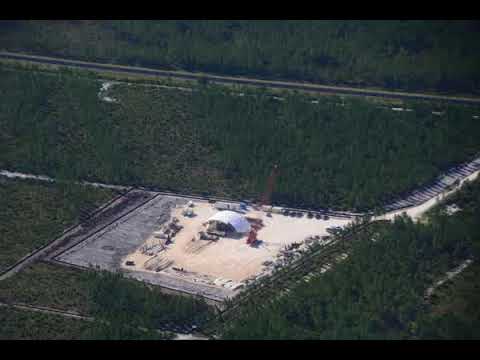
[Tribal Grounds west along GA 94 to TPM equipment, 12:38:38, 30.5257540, -82.0411100]
Tribal Grounds west along GA 94 to TPM equipment, 12:38:38.
Photo: John S. Quarterman for WWALS, on Southwings flight, pilot Allen Nodorft, 2019-10-05.

We shouldn’t have to get more than 20,000 60,000 comments sent to the U.S. Army Corps of Engineers pointing out that the Okefenokee National Wildlife Refuge contributes far more jobs (700+) and other economic benefits (more than $60 million/year) to the region and to Florida and Georgia than even the wildest promises of the miners (150-200 as in the application? 300? 350, as they told some reporters?), and the mine would risk all that, including boating, fishing, and birding in the Swamp and hunting around it. We should be able to point to the rights of the Swamp, Rivers, and Aquifer, and the miners should have to prove beyond a shadow a doubt that they would not violate them.

Update 2021-01-22: And then the Army Corps abdicated oversight in late 2020, leaving only the State of Georgia standing between the miners and Swamp with their five permit applications to the Georgia Department of Environmental Protection.

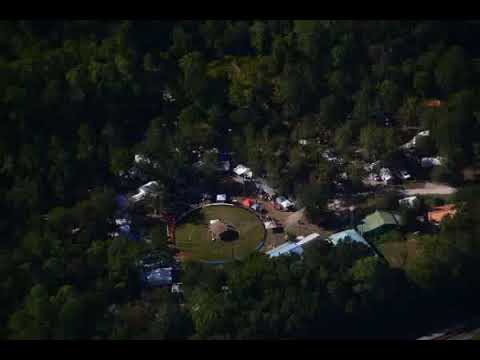
[Twin Pines Minerals mine land, maps, Cherokee of Georgia Tribal Grounds]
Twin Pines Minerals mine land, maps, Cherokee of Georgia Tribal Grounds, photographs by Southwings pilot Chris Carmel on a flight for Suwannee Riverkeeper, 2021-01-10.

You can help, by asking the Georgia Governor and other elected and appointed officials to reject or at least thoroughly review those permit applications.

Example: the Sabal Trail fracked methane pipeline

When the Georgia House of Representatives overwhelmingly refused to grant easements for the Sabal Trail fracked methane pipeline to drill under Georgia rivers, Continue reading

Full page ad by titanium miners in Charlton County Herald 2019-09-25

Update 2019-11-07: This blog post published as an op-ed in the Charlton County Herald, October 9, 2019, as Convenience of private profit is no excuse to risk Okefenokee.

[Convenience of private profit is no excuse to risk Okefenokee --Suwannee Riverkeeper]
Convenience of private profit is no excuse to risk Okefenokee –Suwannee Riverkeeper

It’s the miners who are proposing to risk the Okefenokee Swamp for their private profit, so it’s their job to provide proof, despite what the Twin Pines full page ad in the Charlton County Herald says. Alex Kearns has already made this point for St. Marys Earthkeepers in a letter to the editor. You can comment on the newspaper’s website on that one, or you can send one, too, to: editor@charltonherald.com.

[CharltonCounty-Herald 25Sept2019-0001]
CharltonCounty-Herald 25Sept2019-0001
PDF

Yet in our Suwannee Riverkeeper comments to the Corps, we have provided quite a few studies that indicate the risk, including a Florida Consent Order against the same company for similar mines in Florida.

Where are these studies Twin Pines touts in the ad? They were not in Twin Pines’ mining application, as we and many others, including U.S. EPA and GA-EPD have pointed out. When will these miners’ studies be published?

The one Twin Pines hydrogeological study I have been able to find is in a different application that this miners’ ad doesn’t mention: for groundwater withdrawal and use. That study shows the 4.32 million gallons per day the miners’ want (more than twice all the current permitted water withdrawals in Charlton County) would lower the level of the Floridan Aquifer under the Swamp.

[Figure 8. Drawdown 2930 days]
Figure 8. Drawdown 2930 days

At the August 13, 2019 miners’ meeting in Folkston, GA, Steve Ingle claimed the mine would not affect the Floridan Aquifer, and the miners’ hydrologist Mark Tanner claimed there would be no cone of depression under the Swamp, both on video. This was two weeks after the same company had filed its withdrawal application with a hydrology report that clearly depicts a cone of depression extending under the Swamp. A report authored by the same two hydrologists who were at the August 13th meeting: Robert M. Holt and J. Mark Tanner.

The same miners’ hydrologists also repeatedly refused to guarantee there would be no effect on the Suwannee River, despite the ad’s claims of “100% certainty.”

Pretty much every other point in that ad is similarly easily rebuttable.

It’s curious they didn’t mention their biggest selling point: Continue reading

Old US 129 Bridge, Suwannee River 2019-09-18

A favorite bridge, on Old US 129 across the Suwannee River:

[River Bend and Bridge]
River Bend and Bridge

Seen from US 128, looking upstream on the Suwannee River. North (to the left) is Jasper, Hamilton County, Florida. South (to the right) is Live Oak, Suwannee County. Continue reading

TTM groundwater withdrawal and use permit application to GA-EPD 2019-07-24

At 4.32 million gallons per day (mgd) monthly average, Twin Pines proposes to withdraw more Floridan Aquifer water than almost anything in the surrounding six southeast Georgia counties: 4.32 times the City of Folkston, and almost four times the notorious Nestlé withdrawal request for Ginnie Springs on the Santa Fe River in Florida. You can still comment to the U.S. Army Corps of Engineers about the TPM mining application. Or to GA-EPD about this water withdrawal permit.

[4.32 mgd, 1.44 mgd from each of three wells]
4.32 mgd, 1.44 mgd from each of three wells

The only things bigger nearby are the City of St. Marys (6 mgd) and the Rayonier paper mill at Jesup (74 mgd).

For comparison, Kingsland 4, Waycross-Ware County Industrial Park 3.4, Waycross 3.16, Jesup 3, Kings Bay Submarine Base 2.9 + 1 for irrigation, Satilla Regional Water and Sewer Authority 2.2, Folkston 1.0. Even Chemours in Wayne County only wants 0.605 and Southern Ionics only 0.504 in Charlton County and another 0.504 in Pierce County.

All the permitted withdrawals in Charlton County add up to less than half what TPM wants for its titanium mine near the Okefenokee Swamp: Continue reading

GA-EPD cites Suwannee Riverkeeper and US EPA against TPM titanium mine near Okefenokee Swamp 2019-09-12

GA-EPD told USACE the mining application is incomplete, asked for comments to be reopened, and cited Suwannee Riverkeeper and Georgia River Network:

“Understanding that groundwater hydrologic effects associated with the Twin Pines project have been a central concern expressed by federal resource/regulatory agencies, NGOs (e.g. the Suwannee Riverkeeper and Georgia River Network), and the public at large, we respectfully submit that the 404/401 permit application as submitted thus far is not complete since it lacks full information and findings regarding hydrogeologic factors on site and post-project effects to hydrogeology/groundwater. We feel that it is inappropriate and premature to close the project comment window when such notable elements of the environmental documentation for this project have not yet been made available. documentation which we at GaEPD judge to be important to our review of this project.”

[the 404/401 permit application as submitted thus far is not complete]
the 404/401 permit application as submitted thus far is not complete

This was revealed by USACE in a Public Notice of September 17, 2019. So far, this is the only update posted by the Corps since it closed comments on September 12, 2019.

It also includes comments by U.S. EPA, also saying the application is incomplete, and also cited by GA-EPD. EPA cites cumulative effects and notes numerous lacking documents and studies. EPA concludes:

“Due to the potential for the proposed Twin Pines Minerals mine to adversely affect the hydrology of the Okefenokee NWR, the EPA believes that there is the potential for this project as proposed to cause adverse effects to water quality and the life stages of aquatic life or other wildlife dependent on aquatic systems. The EPA finds that this project, as proposed, may result in substantial and unacceptable impacts to aquatic resources of national importance, as covered in Part IV. paragraph 3(a) of the August 1992 Memorandum of Agreement between the EPA and the Department of the Army regarding CWA Section 404(q).”

Apparently USACE is at least listening to the public and the public and NGOs such as Suwannee Riverkeeper.

You can still send in comments. The Corps won’t say they will read them, but they explicitly won’t say they won’t read them, so keep sending them in, and publish them on social media, as op-eds, etc. Continue reading

Two reappointed to SRWMD so quorum for Wednesday Budget Public Hearing 2019-09-18

Sudden quorum for Budget Public Hearing, Pilgrim’s Pride withdrawal as Renewal rather than Modification, and Nestlé still not on the Suwannee River Water Management District (SRWMD) agenda for this Wednesday afternoon at 3PM. But don’t let that stop you from asking SRWMD to deny Nestlé’s application for more water from Ginnie Springs on the Santa Fe River, and to revisit Nestlé’s withdrawal permit from Madison Blue Spring on the Withlacoochee River.

[Apparently two have been reappointed]
Apparently two have been reappointed

Apparently the Florida Governor has reappointed two SRWMD board members, Charles Keith and Richard Schwab, since they show up again on the SRWMD Current Governing Board Members web page.

I don’t know whether they were reappointed to the same slots or not, since there was no announcement that I have found. Charles Keith was At Large and Richard Schwab was Coastal River Basin.

So they’re back up to Continue reading

Comments: 20,338 on titanium mining near Okefenokee Swamp –USACE 2019-09-12

If this and the 27 news articles on radio, TV, and newspapers in Georgia and Florida, several of them carried by Associated Press across the country, plus the ten op-eds and three editorials, is not enough to establish controversy, I wonder what is. Maybe still more comments and news articles and social media?

[Public Notice: 20,338 comments]
Public Notice: 20,338 comments
PDF

Nedra Rhone, Atlanta Journal-Constitution, 13 September 2019, Mining proposal near Okefenokee draws more than 20K comments from public

The Suwannee Riverkeeper, on Thursday, sent 22 pages of questions to the Corps and the Georgia Department of Environmental Protection asking the agency to deny the permit. The Riverkeeper joined the SELC and other organizations and individuals in asking the Corps to prepare an Environmental Impact Statement, the highest level of analysis available when a proposed federal action may significantly affect the quality of the human environment.

Also in that AJC story:

Commenters expressed concerns ranging from the acres of wetlands that would be lost to what they considered inadequate studies conducted to determine the potential impact of the mine.

In a letter to the Corps, the Southern Environmental Law Center said Continue reading

Deny or EIS, titanium mining near Okefenokee Swamp –Suwannee Riverkeeper for WWALS 2019-09-12

Sent just now as PDF. You can still send in your comments today.

[Who wants to boat, fish, bird, or hunt next to a strip mine?]
Who wants to boat, fish, bird, or hunt next to a strip mine? PDF


September 12, 2019

To: Col. Daniel Hibner, Commander, U.S. Army Corps of Engineers, Savannah District
       Attention: Ms. Holly Ross,  holly.a.ross@usace.army.mil
       1104 North Westover Boulevard, Suite 9, Albany, Georgia  31707

Cc: Stephen Wiedl, Wetlands Unit, stephen.wiedl@dnr.ga.gov
       Georgia Department of Natural Resources, Environmental Protection Division,
       Water Protection Branch, 7 Martin Luther King, Jr. Drive, Atlanta, GA 30334

Re: Applicant: Twin Pines Minerals, LLC, Application Number: SAS-2018-00554

Dear Colonel Hibner,

Suwannee Riverkeeper for WWALS Watershed Coalition (WWALS) asks USACE:

  • to reject the subject Application from Twin Pines Minerals (TPM), given the inappropriate location which would over the years move ever closer to the Okefenokee Swamp, which is the headwaters of the Suwannee and St. Mary’s Rivers, combined with the numerous omissions from the Application regarding the wide hydrogeologic, water quality, ecologic, and economic ramifications of the proposed mining, and the numerous other mines relevant to the proposal.

If USACE continues to process the Application, WWALS requests USACE:

  • to require a complete hydrogeological assessment and report, a full Environmental Impact Statement (EIS), and an economic analysis, with all three covering all the relevant features, mines, and applications in south Georgia and north Florida, including at least those outlined in this letter.
  • to accept comments until at least ninety days after all these documents are submitted to USACE and distributed to the public, preferably on USACE’s website, without requiring site visits to Albany to get them.
  • to hold public hearings in Georgia and Florida for further independent input and review after sufficient time (months or years) for independent third-party review.

The proposed Charlton County, Georgia, TPM mine site is hydraulically upgradient from the Okefenokee Swamp and within close proximity to the boundary of the Okefenokee National Wildlife Refuge (ONWR), with its 600,000 visits per year for boating, birding, and fishing, with more than $60 million annual economic effects including hundreds of jobs supported directly or indirectly, plus hunt clubs surrounding the Swamp. The Swamp provides ecosystem services of great economic values, including storm protection, water quality provisioning, support for nursery and habitat for commercial fishing species; and carbon storage, plus those hunt clubs depend on the Swamp. Any pollution of the Swamp or change in surface or groundwater levels could adversely affect not only ONWR and nearby areas, but also the Okefenokee Swamp Park (OSP) near Waycross, in Ware County, GA, and Stephen C. Foster State Park (SCFSP) in Charlton County, via Fargo in Clinch County. Visitors come from Jacksonville, Florida, Brunswick and Valdosta, Georgia, and from much farther away to visit the Okefenokee Swamp. The Swamp is a treasure to the entire nation and the world.

The stigma of a strip mine next to the swamp could cause people to turn away, taking their dollars with them. Who wants to boat, fish, bird, or hunt next to a strip mine?

Continue reading

Rescheduled: SRWMD Board due to lack of Quorum 2019-09-18

We recommend Dennis J. Price, Practicing Geologist of Hamilton County, Florida, for the Suwannee River Water Management District (SRWMD) Board.

[Dennis Price explains, 13:50:12, 30.57871, -83.05231]
Dennis Price explains, 13:50:12, 30.5787100, -83.0523100
Photo: John S. Quarterman, January 27, 2018, at the Dead River Sink, off the Alapaha River

Received 11:23 AM this morning via email:

SEPTEMBER 10 GOVERNING BOARD MEETING RESCHEDULED

LIVE OAK, FLA., Sept. 10, 2019 — The Suwannee River Water Management District Governing Board meeting for September 10, 2019 at 3:00 p.m. at the District Headquarters has been rescheduled. The rescheduled meeting will be held on September 18, 2019 at 3:00 p.m. at the District Headquarters.

[Rescinded and Timed Out]
Rescinded and Timed Out

That notice doesn’t say why, but this does. Cindy Swirko, Gainesville Sun, Posted Sep 8, 2019 at 2:50 PM Updated Sep 9, 2019 at 12:00 AM, Suwannee district to discuss budget without full board, Continue reading

Cost of reclassifying Georgia rivers from Fishing to Recreational in Triennial Review of Water Quality Standards

Recently I was asked if there would be water monitoring costs to cities or counties because of upgrading our main Suwannee River Basin waters in Georgia from Fishing to Recreational, as we have requested in Georgia’s Triennial Review of Water Quality Standards. Here’s the answer, as best I could determine. And how you can help. For those who wonder why upgrade from Fishing to Recreational, please see the previous blog post.

[Satellite Map]
WWALS Satellite Map of landing in the Suwannee River Basin in Georgia

Specifically the question was: would reclassifying rivers or swamp from Fishing to Recreational cause cities or counties to have to spend more money on water quality monitoring, specifically if a wastewater treatment plant had a spill, more money on water quality sampling afterwards?

The brief answer is: probably not.

Recently, I asked James A. Capp, Chief, Watershed Protection Branch, EPD. He said that for that case, there should be no change, because sampling after a spill is determined mostly by the number of gallons spilled.

Let me use some NPDES permits I have on hand to illustrate.

Here is the language in NPDES Permit No. GA0020222 for Valdosta’s Withlacoochee Wastewater Treatment Plant, first about number of gallons, then about the required sampling. Continue reading